Overview
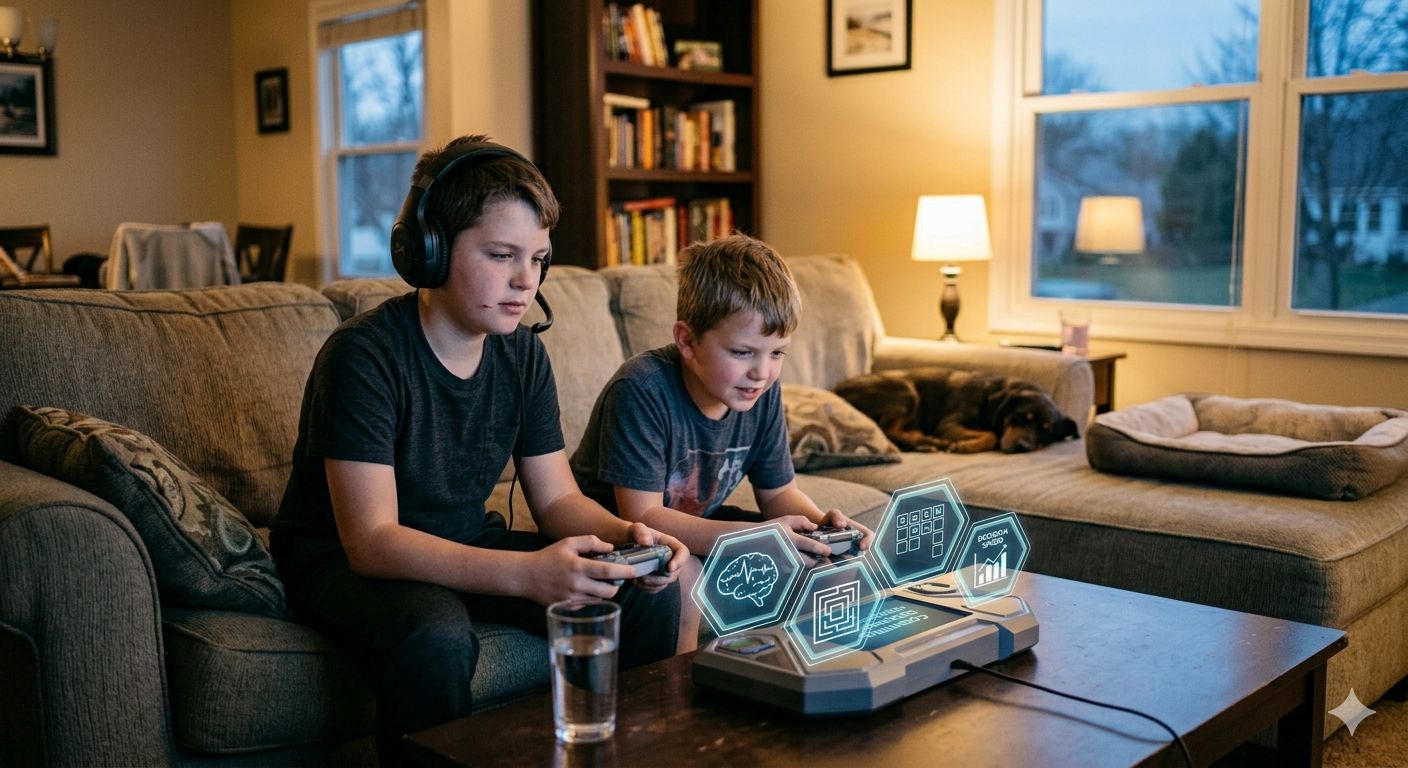
The Healthy Gaming & Cognitive Growth Program is an educational and research-oriented initiative focused on understanding how different types of video games influence children’s cognitive and emotional development. As gaming becomes a central part of modern childhood, many parents, educators, and caregivers are asking important questions:
- Are all video games harmful?
- Can some games improve learning and thinking skills?
- How does gaming affect attention, memory, and emotional well-being?
- What types of games encourage healthy development?
Rather than approaching gaming from a fear-based perspective, this initiative explores gaming through a balanced, evidence-informed lens. The program recognizes that video games are not a single category of media. Different games involve different mechanics, objectives, emotional experiences, and social interactions. Some games may overstimulate or encourage unhealthy habits when used excessively, while others may strengthen important cognitive skills when played responsibly and in moderation.
The Healthy Gaming & Cognitive Growth Program was created to help families better understand these differences. The initiative studies how gameplay experiences influence areas such as:
- Problem-solving ability
- Logical reasoning
- Memory retention
- Reaction speed
- Strategic thinking
- Emotional resilience
- Decision-making
- Creativity and adaptability
The program also encourages healthier conversations around children and technology. Instead of viewing gaming only as a negative activity, the initiative promotes informed decision-making, balanced routines, and thoughtful game selection based on developmental value.
Children today are growing up in a digital environment unlike any previous generation. Video games are no longer a niche hobby; they are part of mainstream culture, education, entertainment, and social interaction. Understanding how these digital experiences shape developing minds is increasingly important for parents, schools, and communities.
This initiative does not promote unrestricted gaming or commercial gaming products. Instead, it focuses on education, awareness, and responsible use. The goal is to help families distinguish between healthy and unhealthy gaming patterns while identifying experiences that may support cognitive growth.
Why Cognitive Development Matters
Cognitive development refers to how children learn to think, reason, remember, solve problems, process information, and respond to challenges. These abilities influence academic performance, communication skills, emotional regulation, and everyday decision-making throughout life.
During childhood and adolescence, the brain undergoes rapid development. Neural connections strengthen through repeated experiences, practice, and learning. Activities that challenge the brain in healthy ways can support the development of important mental skills.
Traditionally, cognitive development has been associated with reading, classroom learning, puzzles, sports, music, and social interaction. However, digital environments are now playing a larger role in how children learn and interact with information.
Some video games require players to:
- Analyze patterns
- Solve complex problems
- Adapt to changing conditions
- Plan strategies
- Manage resources
- Coordinate visual and motor responses
- Work collaboratively with others
These mental activities can engage multiple areas of the brain simultaneously. In certain contexts, carefully selected games may support cognitive engagement and active learning.
At the same time, excessive or poorly balanced gaming habits may interfere with sleep, academic focus, physical activity, and emotional wellbeing. This is why understanding how, when, and what children play is essential.
The Healthy Gaming & Cognitive Growth Program emphasizes that cognitive development is influenced not only by screen time quantity, but also by:
- The type of content
- The quality of interaction
- The emotional environment surrounding gameplay
- The balance between digital and offline activities
- Age appropriateness
- Social context
- Parental guidance
The initiative encourages parents to move beyond the simple question of “How many hours?” and instead explore questions such as:
- What skills does this game encourage?
- Does the game reward patience or impulsivity?
- Does gameplay involve creativity, teamwork, or strategic thinking?
- Is the child emotionally regulated during and after gameplay?
- Does gaming complement or replace healthy routines?
Understanding these distinctions can help families make healthier and more informed choices.
Different Categories of Games
Not all video games function in the same way. Different genres engage different mental and emotional processes. The Healthy Gaming & Cognitive Growth Program studies a wide range of game categories to better understand their developmental effects.
Puzzle and Logic Games
Puzzle-based games often involve pattern recognition, sequencing, memory, planning, and reasoning. These games may encourage children to think critically and experiment with solutions.
Potential cognitive benefits may include:
- Improved logical thinking
- Enhanced problem-solving ability
- Better working memory
- Increased concentration
- Patience and persistence
These games typically reward careful thinking rather than fast reactions, making them useful for encouraging deliberate cognitive engagement.
Strategy Games
Strategy games often require long-term planning, resource management, risk assessment, and decision-making under changing conditions.
Players may need to:
- Predict outcomes
- Adapt strategies
- Analyze multiple variables
- Prioritize objectives
- Think several steps ahead
These experiences may support strategic thinking and cognitive flexibility. Some strategy-based environments also encourage teamwork and communication when played cooperatively.
Educational Games
Educational games are specifically designed to combine learning with interactive engagement. These may focus on subjects such as mathematics, language, science, geography, or creativity.
When thoughtfully designed, educational games may help:
- Reinforce classroom concepts
- Improve motivation toward learning
- Encourage active participation
- Build confidence through repetition and feedback
However, the educational value of these games depends heavily on design quality and age appropriateness.
Action and Reaction-Based Games
Fast-paced action games often involve rapid visual processing, hand-eye coordination, and quick decision-making.
Research in some areas has suggested that certain action-oriented games may improve:
- Reaction time
- Visual attention
- Spatial awareness
- Processing speed
However, these games may also become overstimulating if used excessively or without balance. Age suitability and content intensity are especially important considerations in this category.
Creative and Sandbox Games
Creative games allow players to build, design, experiment, and explore open-ended environments.
These games may encourage:
- Imagination
- Experimentation
- Independent thinking
- Design planning
- Collaboration
Creative digital spaces can sometimes function similarly to digital construction tools, encouraging children to transform ideas into interactive outcomes.
Multiplayer and Social Games

Online multiplayer games involve communication, cooperation, and shared objectives. Positive social gaming experiences may help children practice teamwork and communication skills.
However, online environments can also expose children to:
- Toxic communication
- Peer pressure
- Emotional stress
- Excessive competitiveness
Because of this, parental involvement and healthy boundaries are especially important in online gaming spaces.
Positive vs Negative Gaming Patterns
The Healthy Gaming & Cognitive Growth Program emphasizes that gaming outcomes are influenced not only by the games themselves, but by gaming patterns and habits.
A balanced gaming routine may look very different from unhealthy or compulsive gaming behavior.
Positive Gaming Patterns
Healthy gaming habits often include:
Balanced Time Management
Gaming exists alongside:
- School responsibilities
- Sleep
- Physical activity
- Family interaction
- Outdoor play
- Reading and learning
Balanced routines help prevent gaming from replacing essential developmental activities.
Age-Appropriate Content
Games selected according to maturity level can reduce exposure to excessive stress, inappropriate themes, or emotionally overwhelming experiences.
Parents who understand game ratings and gameplay mechanics are better equipped to guide healthier choices.
Purposeful Gameplay
Some children use gaming as:
- A creative outlet
- A social activity
- A learning experience
- A way to practice problem-solving
Purposeful engagement differs from passive or compulsive screen use.
Emotional Regulation
Healthy gaming environments encourage children to manage frustration, cooperate with others, and recover from setbacks.
Games can sometimes provide opportunities to practice resilience by teaching players how to persist through failure and improve through repetition.
Parental Involvement
Children benefit when parents:
- Understand the games being played
- Discuss gameplay experiences
- Set healthy boundaries
- Encourage moderation
- Participate occasionally
Open communication often creates healthier digital habits than strict restriction alone.
Negative Gaming Patterns
The initiative also studies patterns associated with unhealthy gaming behavior.
Excessive Screen Dependency
When gaming begins replacing sleep, academics, physical activity, or real-world interaction, developmental concerns may emerge.
Overuse may contribute to:
- Fatigue
- Reduced attention span
- Emotional irritability
- Sedentary behavior
- Difficulty disengaging from screens
Emotionally Overstimulating Content
Highly intense or emotionally stressful games may overwhelm younger children who are still developing emotional regulation skills.
Repeated overstimulation can sometimes affect mood, stress levels, or impulse control.
Isolation and Withdrawal
Gaming becomes problematic when children withdraw from family relationships, friendships, hobbies, or responsibilities.
Healthy digital engagement should complement life rather than replace it.
Unstructured Gaming Habits
Unlimited or unsupervised gaming may increase the likelihood of unhealthy routines, sleep disruption, and emotional imbalance.
Children generally benefit from structure, consistency, and clear expectations around screen use.
Our Educational Goals
The Healthy Gaming & Cognitive Growth Program was created to support informed and balanced conversations about gaming and child development.
The initiative’s educational goals include the following:
Helping Parents Understand Gaming Categories
Many parents are unfamiliar with the differences between gaming genres and how they influence behavior and cognition.
The program provides educational resources that explain:
- What different games involve
- Which cognitive skills may they engage
- Potential developmental benefits
- Potential risks and concerns
- Age-appropriate considerations
This allows parents to make decisions based on understanding rather than fear or confusion.
Encouraging Responsible Digital Habits
The initiative promotes a healthy digital balance rather than complete avoidance of technology.
Children are growing up in an increasingly digital world, and learning healthy technology habits is becoming an essential life skill.
The program encourages:
- Structured screen routines
- Healthy sleep habits
- Active lifestyles
- Offline social interaction
- Family engagement
- Mindful technology use
Supporting Research and Awareness
The initiative seeks to contribute to broader conversations around child development, gaming behavior, and educational technology.
Areas of interest include:
- Cognitive skill development
- Emotional resilience
- Attention and focus
- Learning motivation
- Problem-solving behavior
- Parent-child digital communication
The program supports ongoing observation, educational discussion, and evidence-informed exploration of these topics.
Reducing Fear-Based Narratives
Public discussions around gaming are often highly polarized. Some perspectives portray all gaming as harmful, while others ignore legitimate concerns related to overuse and unhealthy digital habits.
The Healthy Gaming & Cognitive Growth Program promotes a more balanced perspective:
- Some games may support learning and cognitive engagement.
- Some gaming habits may become unhealthy without structure.
- Context, moderation, and game selection matter significantly.
This balanced approach helps families make more informed and realistic decisions.
Promoting Healthy Parent-Child Communication
Children are more likely to develop responsible habits when parents engage in open and respectful discussions about technology use.
The initiative encourages parents to:
- Ask questions about gameplay
- Explore games together
- Discuss emotions and experiences
- Set collaborative boundaries
- Focus on guidance rather than punishment
Positive communication often leads to healthier long-term digital behavior.
Looking Ahead
Gaming will continue to evolve as technology advances. Interactive digital experiences are becoming increasingly integrated into education, entertainment, creativity, and social connection.
As this evolution continues, understanding the relationship between gaming and cognitive development becomes more important for families and educators.
The Healthy Gaming & Cognitive Growth Program believes that informed awareness is more valuable than fear-driven assumptions. By studying gaming thoughtfully and responsibly, communities can better understand how digital experiences influence developing minds.
The initiative supports a future where children learn healthy digital balance while benefiting from interactive experiences that encourage creativity, critical thinking, and emotional growth.
Rather than asking whether gaming is entirely “good” or “bad,” the program encourages a more meaningful question:
How can families guide children toward healthier, more constructive digital experiences that support long-term development and wellbeing?
Through education, research, and parent-focused awareness, the Healthy Gaming & Cognitive Growth Program aims to help answer that question with clarity, balance, and responsibility.