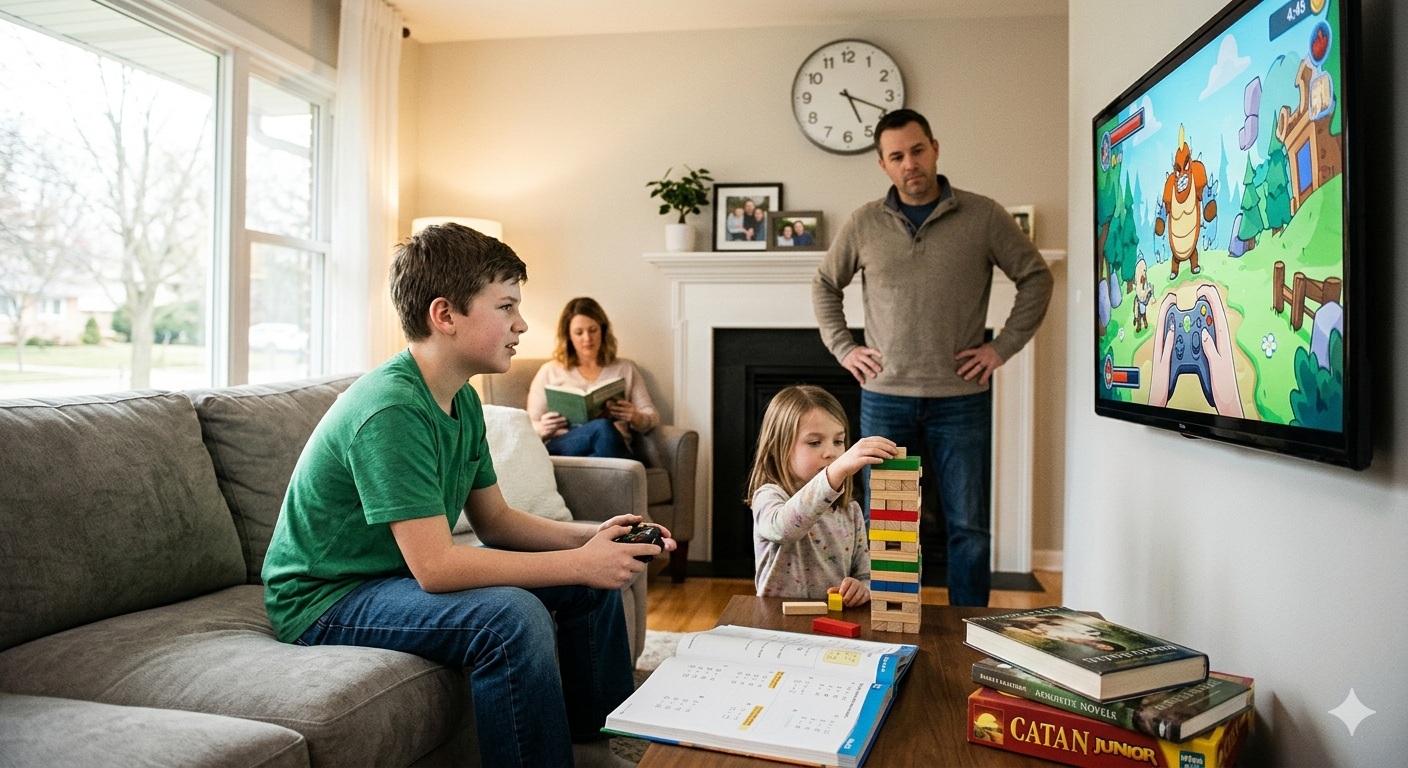
Video games are now a normal part of childhood. Kids play games to relax, socialize, compete, learn, and escape boredom. For many families, gaming has replaced television as the primary form of entertainment. But one question continues to worry parents, teachers, and health professionals alike:
How much gaming time is actually healthy for children?
There is no universal number that works for every child. A teenager who maintains excellent grades, sleeps well, exercises, and has healthy friendships may handle gaming differently than a younger child struggling with emotional regulation or school performance. Modern research increasingly shows that the answer is not simply about hours alone — it is about the relationship between gaming, behavior, sleep, emotional wellbeing, and daily functioning. (AAP)
Still, science does provide strong guidelines that parents can use to create healthy boundaries. Experts from the American Academy of Pediatrics emphasize that balanced digital habits matter more than unlimited freedom or overly strict bans. (AAP)
This article explores evidence-based gaming recommendations by age group, warning signs of unhealthy gaming, how gaming affects the brain and emotions, and practical strategies for creating a healthier digital lifestyle for children.
Why Gaming Feels So Powerful to Kids
To understand healthy gaming limits, it helps to understand why games are so engaging in the first place.
Modern games are carefully designed to activate reward systems in the brain. They provide:
- Fast feedback
- Rewards and achievements
- Social interaction
- Competition
- Progress tracking
- Bright visuals and sound stimulation
- Constant goals and challenges
These features trigger dopamine responses — the brain chemical associated with motivation and pleasure. This is not automatically harmful. In moderation, gaming can improve problem-solving skills, reaction time, teamwork, creativity, and strategic thinking.
However, excessive stimulation can make ordinary activities feel less rewarding. Homework, reading, chores, or outdoor play may begin to seem “boring” compared to gaming.
Research increasingly shows that excessive screen use may contribute to emotional and behavioral difficulties in some children, especially when gaming starts replacing sleep, physical activity, schoolwork, or social interaction. (Reddit)
There Is No Perfect Number — But There Are Healthy Ranges
Parents often search for an exact limit:
“Is two hours okay?”
“Is four hours too much?”
“Should gaming only happen on weekends?”
Science suggests that context matters more than a rigid universal rule. According to the American Academy of Pediatrics, healthy screen habits should consider:
- The child’s age
- Sleep quality
- Physical activity
- Emotional wellbeing
- School performance
- Family relationships
- The type of content being consumed (AAP)
Still, most experts agree on several practical age-based guidelines.
Recommended Gaming Time by Age
Ages 0–2: Avoid Gaming and Passive Screen Exposure
Children under 18–24 months learn primarily through human interaction and real-world exploration. Experts recommend avoiding recreational screen time during this stage except for occasional video chatting with family. (MDPI)
At this age, the brain develops rapidly through:
- Physical movement
- Eye contact
- Language interaction
- Touch and sensory play
Gaming offers little developmental benefit compared to real-world experiences.
Ages 2–5: Around 1 Hour of High-Quality Content
Preschoolers can benefit from limited educational and interactive digital experiences when adults participate alongside them.
Research-backed guidelines commonly recommend:
- About 1 hour daily of high-quality digital content
- Adult supervision and discussion
- Avoiding violent or overstimulating games (MDPI)
Long gaming sessions at this age may interfere with:
- Language development
- Attention span
- Emotional regulation
- Sleep
- Imaginative play
Children in this age group especially struggle with self-control. Fast-paced games can make transitions away from screens emotionally difficult.
Ages 6–12: Focus on Balance Rather Than Unlimited Access
Elementary school children are often introduced to online games, multiplayer systems, and mobile gaming apps during these years.
Most experts recommend:
- Roughly 1–2 hours of recreational gaming on school days
- Slightly more flexibility on weekends
- Prioritizing homework, exercise, sleep, and family interaction first
The key issue during this stage is balance.
According to research, excessive digital media use among school-aged children has been associated with:
- Poorer school performance
- Reduced attention control
- Sleep disruption
- Less physical activity
- Reduced social interaction (HealthyChildren.org)
This does not mean gaming automatically causes these problems. Rather, problems tend to appear when gaming begins replacing essential healthy activities.
A child who games for two hours but still:
- Sleeps properly
- Exercises
- Socializes
- Maintains good grades
- Participates in hobbies
is in a very different situation than a child gaming six hours daily while neglecting responsibilities.
Ages 13–18: Independence With Structure
Teenagers often use gaming socially. Multiplayer games function like digital hangout spaces where friends talk, collaborate, and compete together.
Because schoolwork increasingly requires screens, experts now emphasize managing entertainment screen time separately from educational use. (MDPI)
For teenagers, healthy gaming usually means:
- Clear boundaries around bedtime
- No gaming replacing sleep
- Academic responsibilities completed first
- Emotional stability maintained
- Continued real-world social activity
Research suggests heavy screen use — especially above seven hours daily — is associated with increased mental health risks in adolescents. (Parents)
But again, quality matters.
A teen spending two hours playing cooperative games with friends may experience very different outcomes than a teen spending eight isolated hours in highly addictive competitive environments.
Warning Signs That Gaming Has Become Unhealthy
Parents should pay less attention to exact hours alone and more attention to behavioral warning signs.
Gaming may be excessive if a child begins showing:
1. Declining School Performance
If grades suddenly drop, homework is ignored, or concentration weakens, gaming may be interfering with cognitive focus.
Warning signs include:
- Rushing homework to return to games
- Falling asleep in class
- Avoiding studying
- Loss of academic motivation
Research links excessive digital media use with weaker academic performance and reduced attention control in some children. (HealthyChildren.org)
2. Sleep Problems
Sleep disruption is one of the strongest indicators of unhealthy gaming habits.
Common problems include:
- Staying awake late gaming
- Difficulty waking up
- Irritability in the morning
- Nighttime device use
- Poor sleep quality
Blue light exposure and emotional stimulation before bedtime can interfere with healthy sleep cycles.
Experts strongly recommend removing gaming devices from bedrooms overnight.
3. Emotional Outbursts When Gaming Stops
Children naturally dislike transitions, but extreme emotional reactions may signal unhealthy dependency.
Watch for:
- Rage after losing
- Aggressive behavior when asked to stop
- Anxiety without access to games
- Constant negotiation for “just one more match”
Parents in online parenting communities often describe children who become emotionally consumed by gaming unless strict limits exist. (Reddit)
4. Loss of Interest in Offline Activities
Gaming becomes concerning when children stop enjoying:
- Outdoor play
- Sports
- Reading
- Family activities
- Creative hobbies
- Friendships outside gaming
Healthy gaming should complement life — not replace it.
5. Gaming as Emotional Escape
Some children use gaming to avoid sadness, loneliness, stress, or anxiety.
Research suggests emotional problems and excessive screen use may reinforce each other in a cycle. (Reddit)
A child struggling emotionally may retreat into gaming, while excessive gaming may worsen emotional regulation over time.
Not All Games Affect Kids the Same Way
The type of game matters enormously.
Games That May Offer Benefits
Some games can improve:
- Strategic thinking
- Creativity
- Teamwork
- Problem-solving
- Reaction speed
- Persistence
Games like sandbox builders, puzzle games, educational simulations, and cooperative multiplayer experiences may support learning and social interaction when used moderately.
Games That Require More Monitoring
Certain game designs may encourage compulsive play through:
- Endless reward systems
- Daily login streaks
- Loot boxes
- Competitive ranking pressure
- Constant notifications
Fast-paced, highly stimulating games can be especially difficult for children with impulsivity or emotional regulation challenges.
Parents should pay attention not only to time spent gaming but also to how games affect mood and behavior afterward.
The Most Important Question: What Is Gaming Replacing?
Modern pediatric guidance increasingly focuses on displacement.
In other words:
What healthy activities disappear when gaming increases?
If gaming replaces:
- Sleep
- Exercise
- Homework
- Face-to-face interaction
- Family connection
- Outdoor play
then the balance has become unhealthy. (AAP)
But if gaming exists alongside a healthy lifestyle, moderate use is often manageable.
How Parents Can Create Healthy Gaming Habits
1. Set Predictable Rules
Children respond better to consistent expectations than constantly changing punishments.
Examples:
- Homework before gaming
- No gaming during meals
- No screens 1 hour before bedtime
- Weekend bonus hours only after responsibilities are completed
Consistency matters more than harshness.
2. Avoid Using Gaming as a Babysitter
When screens become the default solution for boredom, frustration, or emotional calming, children may struggle developing independent coping skills.
Encourage:
- Creative play
- Reading
- Outdoor activities
- Sports
- Art
- Family conversations
3. Play Together Sometimes
Co-playing helps parents:
- Understand game content
- Monitor online interactions
- Teach digital behavior
- Strengthen relationships
Children are more likely to accept healthy boundaries when parents show interest instead of constant criticism.
4. Watch the Child, Not Just the Clock
Some children handle gaming responsibly. Others become emotionally overwhelmed quickly.
Parents should ask:
- Is my child sleeping well?
- Are grades stable?
- Are friendships healthy?
- Is gaming causing emotional instability?
- Does my child still enjoy offline life?
Those answers matter more than an exact timer.
5. Model Healthy Screen Behavior
Children notice adult habits.
A parent constantly scrolling phones while demanding children reduce gaming sends mixed messages.
Healthy digital balance should exist across the whole family.
A Balanced Perspective Matters
Gaming is not automatically harmful.
Many children:
- Build friendships through games
- Learn teamwork
- Develop problem-solving skills
- Improve creativity
- Relax after stressful school days
The goal is not eliminating games entirely.
The real goal is helping children develop a healthy relationship with technology before unhealthy patterns become deeply ingrained.
Research increasingly supports a balanced, individualized approach focused on:
- Emotional wellbeing
- Sleep
- School performance
- Physical activity
- Healthy routines
- Strong family communication (AAP)
Final Thoughts
So, how much gaming time is too much for kids?
The answer is simple:
Gaming becomes “too much” when it begins harming a child’s sleep, emotional wellbeing, school performance, relationships, or physical health.
For younger children, shorter and highly supervised sessions are healthiest. Older children and teens need increasing independence, but still benefit from clear boundaries and strong routines.
Rather than obsessing over an exact number of hours, parents should focus on balance, behavior, and wellbeing.
A healthy gamer is still:
- Sleeping enough
- Learning effectively
- Staying physically active
- Managing emotions
- Maintaining friendships
- Participating in real life
When gaming supports life instead of replacing it, it can remain a positive part of childhood rather than a harmful one.