Balancing Privacy, Trust, and Responsibility in the Digital Age
Video games are now a major part of childhood. From mobile games and online multiplayer platforms to educational apps and competitive esports, children today grow up in a world where gaming is deeply integrated into entertainment, social interaction, and even learning. For many families, gaming is no longer an occasional hobby—it is a daily activity.
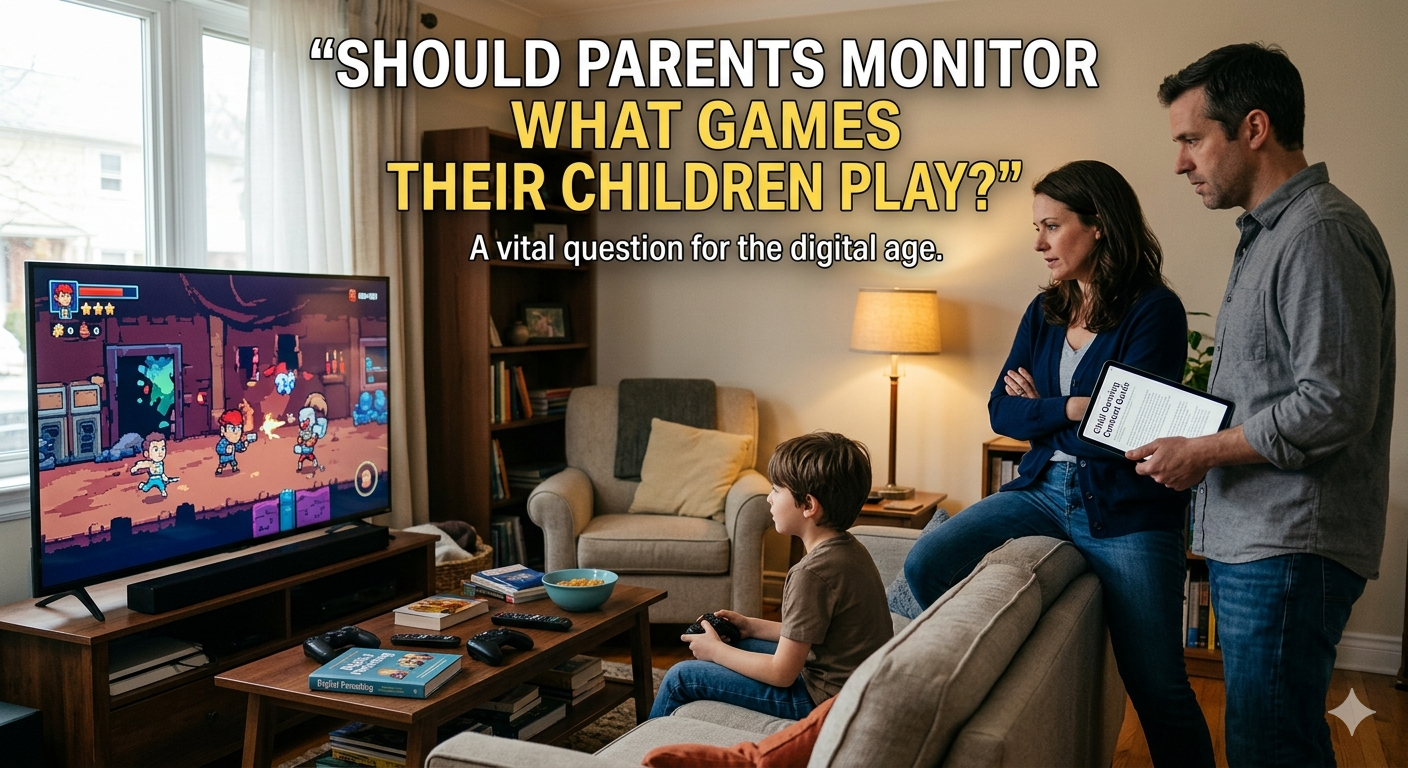
As gaming becomes more common, many parents face an important question: Should parents monitor what games their children play?
Some believe monitoring is essential for protecting children from harmful content, online dangers, and unhealthy gaming habits. Others worry that excessive monitoring may invade privacy, damage trust, or create unnecessary conflict between parents and children.
The reality is that modern parenting in the digital age requires a careful balance. Parents have a responsibility to guide and protect children, but children also need growing independence, personal space, and opportunities to develop decision-making skills.
This article explores the reasons parents monitor gaming, the potential risks of excessive control, the importance of trust and communication, and how families can create healthy digital boundaries without damaging relationships.
Why Video Games Matter More Than Ever
Video games are no longer simple arcade-style entertainment. Today’s games are immersive social environments where children:
- Communicate with strangers and friends
- Spend money through in-game purchases
- Experience intense emotional stimulation
- Access online communities
- Encounter advertising and algorithms
- Participate in competitive ranking systems
Gaming platforms now function as:
- Social networks
- Entertainment systems
- Communication tools
- Digital marketplaces
Because gaming environments have become more complex, parental involvement has also become more important.
Why Parents Feel the Need to Monitor Games
Parents monitor gaming for many valid reasons. Their concerns often go beyond simple screen time.
1. Exposure to Violent or Inappropriate Content
Some games contain:
- Graphic violence
- Strong language
- Sexual content
- Gambling-like reward systems
- Disturbing imagery
Children may not always be emotionally mature enough to process certain themes appropriately.
Younger children especially can struggle to separate fantasy from reality fully. Even older children may become emotionally affected by highly intense or disturbing content.
Parents often monitor games to ensure content matches their child’s developmental stage and emotional maturity.
2. Online Safety Concerns
Many modern games include voice chat, messaging systems, and online multiplayer interactions.
This creates potential exposure to:
- Cyberbullying
- Toxic behavior
- Harassment
- Predators
- Scams
- Inappropriate conversations
Children may not recognize dangerous online behavior immediately. Monitoring helps parents identify potential risks before serious harm occurs.
3. Excessive Gaming and Addiction Risks
Some games are intentionally designed to keep players engaged for long periods through:
- Rewards
- Daily challenges
- Competitive rankings
- Social pressure
- Unlockable content
Parents may monitor gaming because they worry about:
- Sleep disruption
- Declining school performance
- Social withdrawal
- Emotional dependency on gaming
Moderate gaming is often harmless, but excessive gaming can interfere with healthy development.
4. Financial Concerns
Many games now include:
- Microtransactions
- Loot boxes
- Subscription systems
- In-game purchases
Children may accidentally spend large amounts of money or become pressured into purchases by peers or game mechanics.
Monitoring payment settings and purchases helps protect children from financial exploitation.
5. Protecting Emotional Well-Being
Games can strongly influence emotions. Some children become:
- Aggressive after losing
- Anxious about online competition
- Obsessed with rankings
- Emotionally dependent on gaming success
Parents often monitor gaming not because they dislike games, but because they care about emotional balance and mental health.
The Other Side: Why Excessive Monitoring Can Be Harmful
While monitoring has benefits, excessive control can create new problems.
Children, especially older ones, need opportunities to develop:
- Independence
- Responsibility
- Self-regulation
- Privacy
- Trust
When parents become overly controlling, children may feel:
- Distrusted
- Constantly watched
- Emotionally disconnected
- Unable to make choices independently
This can damage the parent-child relationship over time.
The Importance of Privacy for Children
Privacy is an important part of emotional development. As children grow, they naturally seek more personal space and autonomy.
Healthy privacy helps children:
- Build identity
- Develop confidence
- Learn independent thinking
- Practice decision-making
- Establish personal boundaries
If parents monitor every conversation, every game, and every digital interaction excessively, children may stop communicating openly.
Instead of learning responsibility, they may simply learn how to hide behavior more effectively.
Trust vs. Surveillance
There is a major difference between guidance and surveillance.
Healthy Guidance
Healthy parental involvement includes:
- Open conversations
- Clear rules
- Age-appropriate supervision
- Teaching digital safety
- Gradual independence
This approach builds trust and cooperation.
Excessive Surveillance
Excessive monitoring may include:
- Secretly reading all messages
- Constant spying
- Harsh punishments
- No privacy at all
- Micromanaging every activity
This approach can increase secrecy and conflict.
Children who feel constantly controlled may:
- Hide accounts
- Use devices secretly
- Lie about gaming habits
- Avoid discussing problems with parents
Ironically, extreme monitoring can reduce parental awareness rather than improve it.
Age Matters: Monitoring Should Change Over Time
The level of parental monitoring should evolve as children mature.
Young Children
Young children need close supervision because they:
- Lack judgment
- Are highly impressionable
- Cannot assess online risks properly
- Struggle with self-control
For younger children, parents should:
- Approve games directly
- Use parental controls
- Monitor online interactions
- Set clear time limits
At this stage, active involvement is appropriate and necessary.
Preteens
As children grow older, parents can begin shifting toward guided independence.
This may involve:
- Discussing game choices together
- Teaching online safety skills
- Encouraging self-regulation
- Allowing some autonomy with supervision
The focus gradually moves from control to coaching.
Teenagers
Teenagers need increasing levels of trust and independence. Excessive monitoring during adolescence may feel invasive and disrespectful.
However, this does not mean parents should disappear entirely.
Healthy teenage supervision often includes:
- Open communication
- Shared expectations
- Occasional check-ins
- Discussions about digital responsibility
- Mutual trust
Teenagers are more likely to cooperate when they feel respected rather than controlled.
Understanding Why Children Love Games
Parents who understand gaming culture are often better equipped to guide children effectively.
Games provide:
- Entertainment
- Achievement
- Social connection
- Stress relief
- Creativity
- Competition
- Escapism
For many children, gaming is not “just playing.” It is where friendships form, skills develop, and identity is explored.
Parents who dismiss gaming entirely may unintentionally create emotional distance.
The Benefits of Parental Involvement
Monitoring does not need to be negative. When done thoughtfully, involvement can strengthen relationships.
Playing Together
One of the best ways to understand gaming is to participate occasionally.
Playing with children can:
- Build trust
- Create bonding opportunities
- Help parents understand game content
- Encourage open discussion
Children often enjoy sharing their gaming world when parents show genuine interest.
Talking About Games
Conversations matter more than surveillance.
Parents can ask:
- “What do you enjoy about this game?”
- “Who do you play with?”
- “How does the game make you feel?”
- “What happens if someone is rude online?”
These discussions encourage reflection and communication.
Setting Healthy Boundaries
Children benefit from clear, reasonable boundaries around gaming.
Examples of Healthy Gaming Rules
Families may establish rules such as:
- Homework before gaming
- No gaming during meals
- Screen-free bedtime routines
- Age-appropriate games only
- Time limits on school nights
Consistency is important. Rules should feel predictable rather than random or emotionally driven.
Using Parental Controls Wisely
Parental controls can be useful tools when used transparently.
They may help parents:
- Limit screen time
- Restrict purchases
- Filter inappropriate content
- Manage online interactions
However, controls should ideally support communication rather than replace it.
Children should understand:
- Why limits exist
- What risks parents are trying to reduce
- How independence can increase with responsibility
Transparency builds cooperation.
Teaching Digital Responsibility
Ultimately, the goal is not permanent control. The goal is helping children learn to manage technology responsibly themselves.
Important digital skills include:
- Recognizing harmful behavior
- Managing screen time
- Handling online conflict
- Protecting privacy
- Understanding manipulation in games
- Balancing gaming with real-life responsibilities
Children who learn these skills become safer and more independent over time.
Warning Signs Parents Should Not Ignore
While privacy matters, some situations require stronger parental involvement.
Parents should pay attention if a child:
- Becomes isolated socially
- Shows severe mood changes
- Hides gaming activity constantly
- Experiences sleep problems
- Neglects schoolwork
- Displays aggression linked to gaming
- Interacts with suspicious strangers online
In these cases, closer supervision may be necessary to protect the child’s well-being.
Building Trust Through Communication
Trust is one of the most important factors in healthy digital parenting.
Children are more likely to approach parents about online problems if they believe:
- They will be listened to calmly
- They will not immediately lose all privileges
- Their feelings will be respected
Fear-based parenting can sometimes discourage honesty.
Avoiding Power Struggles
Gaming often becomes a source of family conflict because it involves emotional investment, social identity, and entertainment all at once.
Frequent arguments about gaming may escalate when:
- Rules are inconsistent
- Parents react emotionally
- Children feel misunderstood
- Communication breaks down
Parents can reduce conflict by:
- Staying calm
- Listening actively
- Collaborating on boundaries
- Explaining decisions clearly
Respectful dialogue is usually more effective than constant punishment.
The Role of Balance
The healthiest approach to gaming is balance rather than extremes.
Children benefit when gaming exists alongside:
- School responsibilities
- Physical activity
- Family interaction
- Outdoor play
- Creative hobbies
- Adequate sleep
Problems usually arise when gaming becomes the dominant focus of daily life.
Preparing Children for a Digital World
Modern children are growing up in a digital environment that previous generations never experienced. Parents cannot completely shield children from technology, nor should they necessarily try to.
Instead, parenting today often involves:
- Guidance rather than total restriction
- Education rather than fear
- Collaboration rather than constant control
The long-term goal is raising children who can make healthy digital choices independently.
Finding the Right Balance
There is no universal formula for how much parents should monitor gaming. Every child is different.
Some children need:
- More structure
- More supervision
- Stronger boundaries
Others demonstrate:
- Good self-control
- Honest communication
- Responsible gaming habits
Effective parenting adapts to the child’s maturity, personality, and needs.
The key question is not simply:
“Should parents monitor games?”
but rather:
“How can parents guide children while still building trust and independence?”
Final Thoughts
Parents should monitor what games their children play—but the way they monitor matters greatly.
Healthy monitoring is not about spying, controlling every moment, or eliminating privacy entirely. It is about staying informed, protecting children from genuine risks, teaching digital responsibility, and maintaining open communication.
Children need both guidance and trust. Too little supervision can leave them vulnerable to harmful content, unhealthy gaming habits, or online dangers. Too much control can damage trust, reduce independence, and encourage secrecy.
The most effective approach lies somewhere in the middle: involved but respectful, protective but flexible, watchful but trusting.
In the digital age, parenting is no longer just about managing the physical world. It also means helping children navigate complex online environments with wisdom, responsibility, and emotional balance. And perhaps the strongest tool parents have is not surveillance technology, but a relationship built on communication, trust, and understanding.