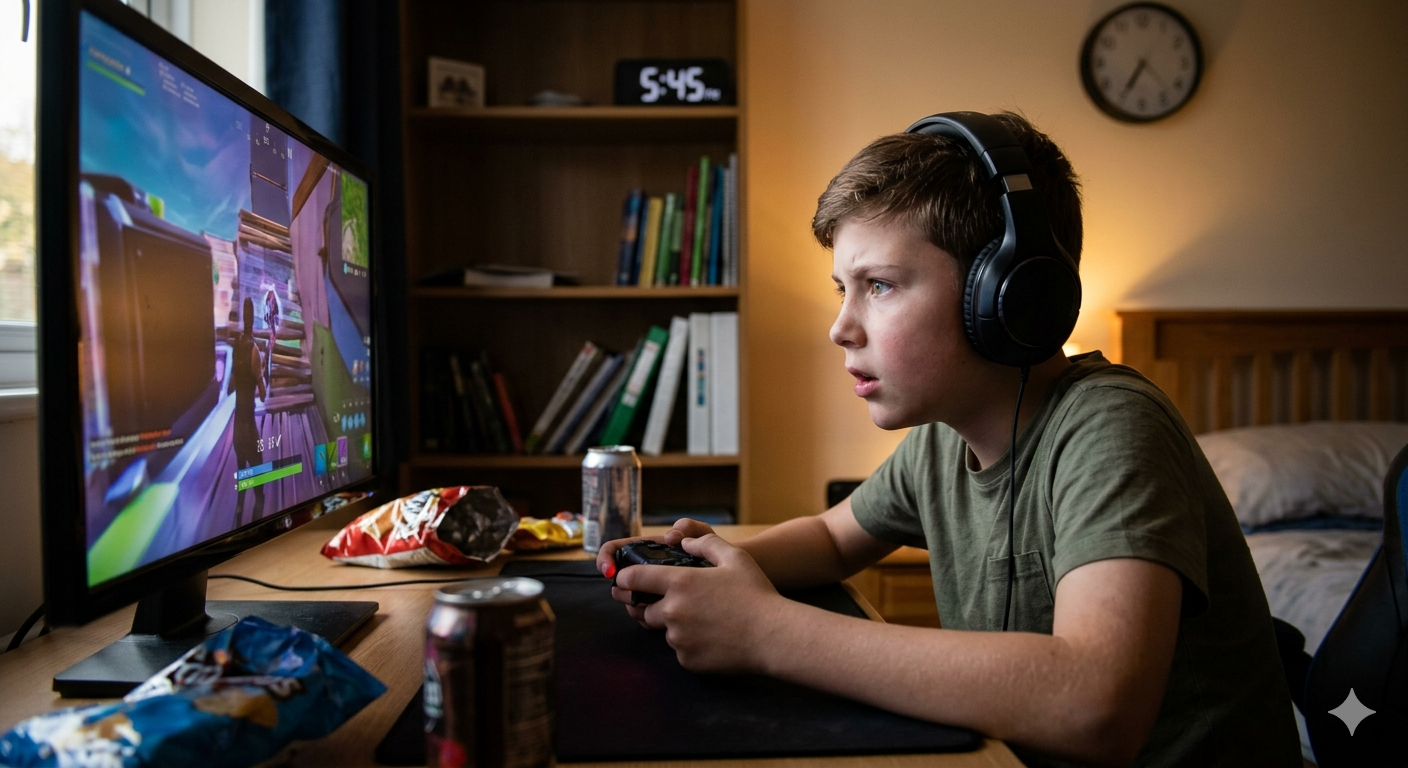
Understanding Competition, Aggression, Teamwork, and Dopamine Loops in One of the World’s Most Popular Games
Few online games have shaped modern childhood as dramatically as Epic Games’s Fortnite. Since its explosive rise in popularity, Fortnite has become far more than a video game. For millions of children and teenagers, it is a social platform, competitive environment, entertainment hub, and digital community all at once.
Children log in daily to:
- Compete against other players
- Communicate with friends
- Complete challenges
- Unlock rewards
- Build strategies
- Watch live virtual events
- Customize characters
- Develop online social identities
While many parents recognize Fortnite as “just a game,” experts increasingly understand that games like Fortnite can significantly influence children’s emotions, attention, behavior, and daily habits.
This has led many families to ask:
- Does Fortnite make children aggressive?
- Is Fortnite addictive?
- How does Fortnite affect the brain?
- Can Fortnite improve teamwork or problem-solving?
- How much Fortnite is too much?
The truth is more nuanced than many headlines suggest.
Fortnite can offer social and cognitive benefits for some children while also creating emotional, behavioral, and screen-time challenges for others. Much depends on age, personality, emotional regulation, parental involvement, and how the game is used.
This guide explores how Fortnite affects the developing brain and behavior in 2026, including competition, aggression, dopamine loops, teamwork, emotional reactions, and healthy digital balance.
Why Fortnite Is So Engaging for Children
Fortnite was designed to be exciting, fast-paced, social, and constantly rewarding.
The game combines:
- Competition
- Survival mechanics
- Creative building
- Bright visuals
- Frequent updates
- Social interaction
- Reward systems
- Customization
Unlike older games that remained mostly unchanged, Fortnite evolves constantly. New seasons, events, items, collaborations, and challenges keep children emotionally invested.
This constant novelty activates one of the brain’s strongest motivational systems: anticipation.
Children never fully know what reward, challenge, or experience is coming next, which helps keep them engaged for long periods.
Understanding Dopamine Loops in Fortnite
One of the most discussed concerns surrounding Fortnite is its use of reward-driven engagement systems, often called dopamine loops.
Dopamine is a neurotransmitter connected to:
- Motivation
- Anticipation
- Reward-seeking
- Habit formation
Importantly, dopamine is not simply the “pleasure chemical.” It is more closely tied to wanting and seeking.
Fortnite constantly stimulates this system through:
- Victory rewards
- Unlockable items
- Daily quests
- Battle Pass progression
- Rare cosmetic rewards
- Leveling systems
- Social recognition
- Competitive wins
Children often experience repeated cycles of:
- Anticipation
- Reward pursuit
- Emotional excitement
- Temporary satisfaction
- Desire for another reward
This loop can encourage prolonged gaming sessions.
Why Children Struggle to Stop Playing
Many parents notice that children become frustrated or emotional when asked to stop playing Fortnite.
This is partly because the game is designed around continuous engagement:
- “One more match”
- “One more level”
- “One more challenge”
- “One more reward”
Each session feels incomplete because another reward is always nearby.
The developing brain is particularly vulnerable to these reward systems because children generally have:
- Less impulse control
- Higher emotional reactivity
- Greater sensitivity to rewards
- Less mature self-regulation systems
This does not mean Fortnite is automatically harmful, but it does mean some children may struggle with balance.
Does Fortnite Cause Aggression?
This is one of the most debated questions in gaming research.
The answer is complicated.
There is no strong evidence that Fortnite directly causes violent behavior in most children. However, certain children may show increased:
- Irritability
- Emotional frustration
- Competitive anger
- Impulsive reactions
- Aggressive communication
This often comes less from violent content itself and more from:
- Intense competition
- Repeated losses
- Overstimulation
- Social pressure
- Emotional investment
Fortnite is highly competitive by design. Losing repeatedly can trigger frustration, especially in children who already struggle with emotional regulation.
Some children may:
- Yell during matches
- Become angry after defeats
- Lash out verbally
- Struggle to calm down after gaming
The emotional intensity of online competition can amplify these reactions.
Competitive Stress and Emotional Regulation
Fortnite creates high-pressure moments that trigger adrenaline and stress responses.
During matches, children often experience:
- Rapid decision-making
- Fear of losing
- Constant alertness
- Social pressure from teammates
- Emotional highs and lows
This can improve certain cognitive skills, but it may also leave some children emotionally overstimulated.
After long gaming sessions, some children appear:
- More irritable
- Restless
- Emotionally reactive
- Mentally exhausted
This is especially common when gaming continues late into the evening.
The Impact of Fortnite on Attention Span
Fast-paced games like Fortnite train the brain to respond quickly to changing stimuli.
Children constantly process:
- Visual movement
- Audio cues
- Enemy positions
- Building mechanics
- Resource management
- Team communication
This can improve:
- Reaction speed
- Visual attention
- Rapid decision-making
However, some researchers and educators worry that heavy exposure to high-intensity digital stimulation may make slower activities feel less engaging.
Children accustomed to constant stimulation may struggle with:
- Sustained focus
- Patience
- Quiet learning environments
- Reading for long periods
- Delayed rewards
This does not happen to every child, but excessive gaming without balance can contribute to attention difficulties.
Fortnite and Social Development
Not all Fortnite effects are negative.
For many children, Fortnite functions as a social experience rather than solitary entertainment.
Players often:
- Collaborate with teammates
- Coordinate strategies
- Practice communication
- Build friendships
- Solve problems together
For socially active children, Fortnite can strengthen:
- Teamwork
- Cooperation
- Strategic thinking
- Leadership skills
- Social bonding
Children often use Fortnite the same way earlier generations used playgrounds or neighborhood sports.
Many friendships are maintained through shared gaming experiences.
Teamwork and Collaboration Skills
Fortnite’s squad modes require cooperation.
Successful teams often depend on:
- Communication
- Planning
- Shared goals
- Role coordination
- Adaptability
Children may learn to:
- Support teammates
- Share resources
- Revive others
- Develop tactics
- Handle changing situations quickly
These cooperative experiences can positively support social learning when interactions remain healthy.
The Dark Side of Online Communication
Like many online multiplayer games, Fortnite also exposes children to online toxicity.
Players may encounter:
- Insults
- Bullying
- Harassment
- Offensive language
- Peer pressure
- Trash talk
- Manipulation
Voice chat can be especially concerning for younger children.
Some children become emotionally affected by:
- Public criticism
- Team conflict
- Humiliation after mistakes
- Competitive pressure
Parents should understand that online gaming communities can strongly influence children’s emotional wellbeing.
Sleep Disruption and Brain Recovery
One of the biggest health concerns surrounding Fortnite is sleep disruption.
Fortnite’s intense stimulation makes it difficult for some children to relax after playing.
Late-night gaming may interfere with:
- Melatonin production
- Sleep quality
- Emotional regulation
- Attention the next day
- Academic performance
Children often stay awake longer because Fortnite matches create psychological momentum.
The brain remains highly alert after gameplay, making sleep harder.
Common warning signs include:
- Difficulty waking up
- Morning irritability
- Reduced concentration
- Chronic tiredness
- Mood swings
Healthy sleep is essential for brain development, emotional regulation, and learning.
Fortnite and Screen Time Balance
The issue is not only Fortnite itself but also overall balance.
Gaming becomes unhealthy when it consistently replaces:
- Physical activity
- Outdoor play
- Homework
- Family interaction
- Creative hobbies
- Healthy sleep
- Offline friendships
A balanced child can usually enjoy Fortnite without major problems.
The key question is:
“Is gaming enhancing life or replacing important parts of it?”
Signs Fortnite May Be Affecting Your Child Unhealthily
Parents should pay attention to patterns such as:
- Extreme anger when losing
- Emotional meltdowns when asked to stop
- Secretive gaming
- Declining school performance
- Sleep problems
- Reduced physical activity
- Obsessive thinking about Fortnite
- Loss of interest in offline activities
These signs may indicate unhealthy gaming habits or emotional imbalance.
Why Some Children Are More Vulnerable
Not every child reacts to Fortnite the same way.
Children may be more vulnerable if they already struggle with:
- Impulse control
- Anxiety
- Emotional regulation
- Social isolation
- ADHD-related challenges
- Low self-esteem
- Excessive competitiveness
For some children, Fortnite becomes emotionally consuming because it provides:
- Social validation
- Escape from stress
- Achievement
- Identity
- Constant stimulation
Understanding the emotional reason behind excessive gaming is often more helpful than punishment alone.
Can Fortnite Improve Cognitive Skills?
Interestingly, some research suggests action games may improve certain mental skills.
Fortnite may support:
- Spatial awareness
- Reaction speed
- Visual processing
- Strategic planning
- Fast decision-making
- Adaptability
Creative modes may also encourage:
- Problem-solving
- Design thinking
- Imagination
- Digital creativity
However, benefits generally appear when gaming is moderate and balanced with healthy offline development.
The Role of Parents Matters Most
The healthiest gaming experiences usually happen when parents remain involved.
Children benefit when parents:
- Understand the game
- Discuss online behavior
- Set healthy limits
- Encourage balance
- Monitor emotional reactions
- Keep communication open
Strict punishment without understanding often creates secrecy rather than healthier habits.
Healthy Fortnite Rules for Families
Many families benefit from clear, consistent boundaries such as:
1. No Gaming Before Schoolwork
Responsibilities come first.
2. Screen-Free Bedtime
Avoid Fortnite at least 1–2 hours before sleep.
3. Time Limits
Use reasonable daily or weekly gaming boundaries.
4. Encourage Offline Activities
Sports, hobbies, reading, and outdoor play matter.
5. Monitor Voice Chat
Especially for younger children.
6. Watch Emotional Reactions
Gaming should not consistently create extreme distress.
7. Play Together Occasionally
Understanding the game improves communication and trust.
Should Children Be Allowed to Play Fortnite?
There is no universal answer.
Fortnite may be manageable for some children and overwhelming for others.
Factors parents should consider include:
- Age
- Maturity
- Emotional regulation
- Screen habits
- Sleep quality
- Academic balance
- Online behavior
- Social wellbeing
Younger children often require more supervision because they are more vulnerable to:
- Emotional overstimulation
- Online influence
- Compulsive play patterns
- Toxic interactions
A Balanced Perspective on Fortnite
Fortnite is not simply “good” or “bad.”
It is a powerful digital environment designed to maximize engagement.
That environment can:
- Encourage teamwork
- Build social connections
- Improve strategic thinking
- Stimulate creativity
But it can also:
- Trigger emotional frustration
- Encourage excessive screen time
- Disrupt sleep
- Create compulsive reward-seeking habits
- Expose children to toxic online interactions
The most important factor is not just the game itself, but how it fits into a child’s overall life.
Final Thoughts
In 2026, Fortnite remains one of the most influential games in children’s digital culture.
Understanding its effects requires moving beyond simplistic assumptions.
Fortnite does not automatically damage children’s brains, nor is it completely harmless. Its impact depends heavily on:
- Duration of play
- Emotional maturity
- Family involvement
- Online supervision
- Balance with offline life
Children thrive when gaming exists alongside:
- Healthy sleep
- Physical activity
- Emotional support
- Real-world friendships
- Creative learning
- Family connection
Parents do not need to panic about Fortnite, but they should remain informed, involved, and attentive.
When used responsibly and in moderation, Fortnite can be an entertaining and social experience. Without boundaries, however, it can begin to affect emotional regulation, attention, sleep, and daily balance in ways families should not ignore.