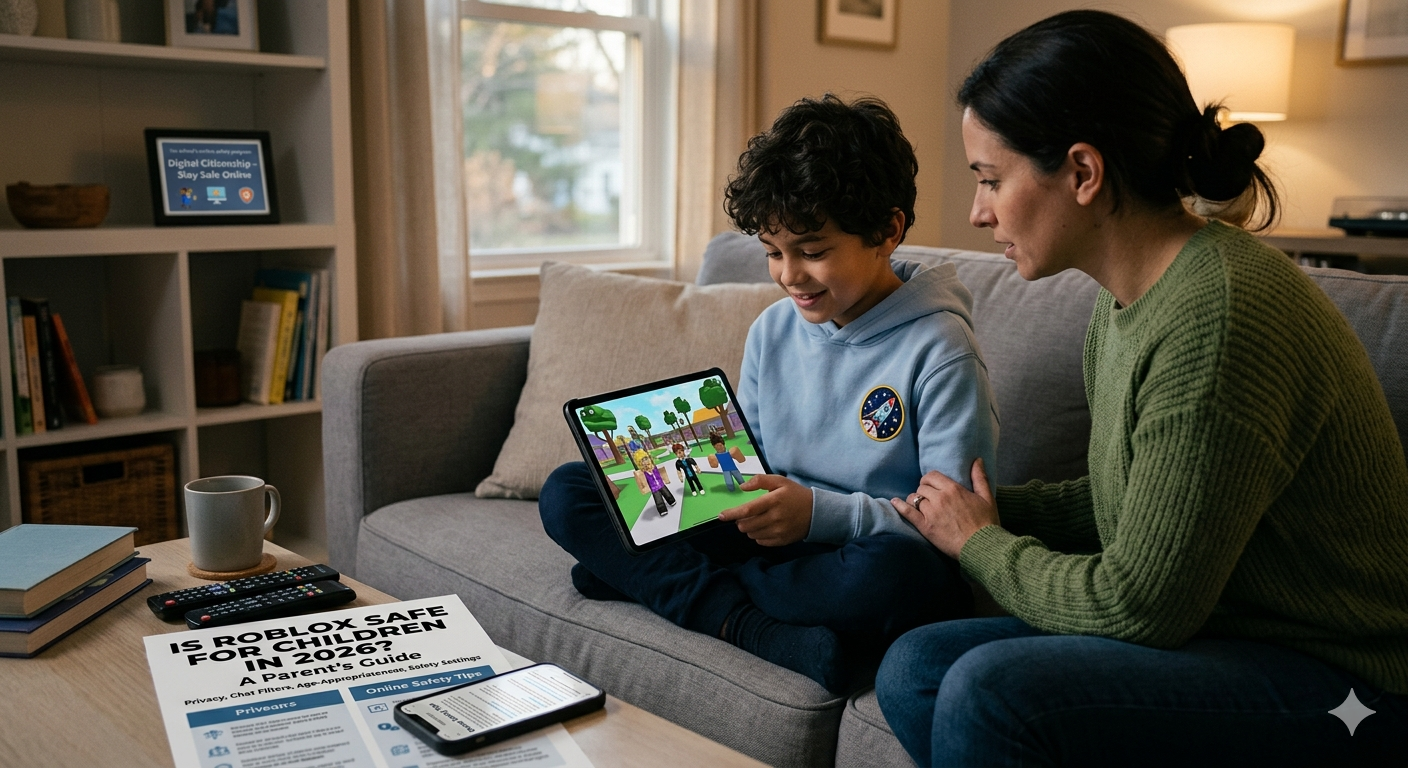
A Complete Parent’s Guide to Content Risks, Chat Exposure, Behavior, Creativity, and Healthy Screen Time
Few online platforms are as popular with children as Roblox Corporation’s Roblox. Millions of children log in daily to explore virtual worlds, play games created by users, socialize with friends, and even learn basic coding and digital creativity skills.
For many families, Roblox feels harmless at first glance. Its colorful graphics and playful style make it appear child-friendly. But in 2026, the conversation around Roblox safety has become more complicated. Parents, researchers, educators, and lawmakers are increasingly asking important questions:
- Is Roblox actually safe for children?
- Can kids encounter inappropriate content?
- How dangerous is the chat system?
- Does Roblox encourage unhealthy screen habits?
- Can the platform still provide educational or creative benefits?
The honest answer is this: Roblox can be both beneficial and risky depending on how a child uses it, how old they are, and how involved parents are in guiding the experience.
This guide breaks down everything parents should know in 2026 about Roblox safety, including content exposure, online interactions, emotional effects, creativity, and healthy boundaries.
What Exactly Is Roblox?
Many parents think Roblox is a single video game. It is actually a massive online platform where users create and share games and virtual experiences.
Children can:
- Play games created by others
- Build their own games
- Chat with players
- Customize avatars
- Spend virtual currency
- Join social communities
Because most content is user-generated, Roblox functions more like a mix between gaming, social media, and virtual worlds.
This flexibility is one reason children love it. There are obstacle courses, roleplay games, racing games, simulations, educational experiences, and creative building tools all inside one platform.
But user-generated content also creates moderation challenges.
Why Roblox Is So Popular With Kids
Roblox appeals strongly to children because it offers:
- Endless variety
- Social interaction
- Creativity
- Fast rewards
- Constant updates
- Personalized avatars
- Multiplayer competition
- Roleplay and imagination
Unlike traditional games with fixed content, Roblox constantly changes because users keep creating new experiences.
For many children, Roblox becomes more than entertainment. It becomes part of their social life.
Friends talk about Roblox at school, watch Roblox videos online, and communicate while playing together. This social connection can make children emotionally attached to the platform.
The Biggest Safety Concerns Parents Should Know
1. Exposure to Inappropriate Content
One of the largest concerns surrounding Roblox is inconsistent content moderation.
Although Roblox uses moderation systems and age ratings, inappropriate content can still appear. Researchers and journalists have repeatedly raised concerns about children encountering:
- Violent content
- Sexual themes
- Disturbing imagery
- Gambling-style mechanics
- Horror experiences
- Inappropriate roleplay
- Offensive language
Some experiences appear harmless at first but later expose children to mature themes through player interactions or hidden content.
A 2025 investigation described the risks on Roblox as “deeply disturbing,” highlighting how easily children could encounter unsafe interactions and inappropriate material. (The Guardian)
Because Roblox experiences are created by users, moderation is reactive as much as proactive. Harmful content can appear before it is removed.
Chat Exposure and Stranger Interaction
Is Roblox Chat Dangerous?
Chat exposure remains one of the biggest concerns for parents in 2026.
Children can communicate through:
- Public chat
- Private messaging
- Voice chat
- In-game interactions
While many interactions are harmless, the risks include:
- Grooming attempts
- Manipulation
- Bullying
- Scams
- Pressure to move conversations to other apps
- Exposure to adult language or topics
Roblox has introduced stricter communication protections in 2026, including age verification systems and age-based chat restrictions. (Roblox)
The platform now requires age checks for chat access in many regions and limits communication between adults and younger users. (Roblox)
Still, experts and parents continue to report concerns that harmful interactions can bypass moderation systems. (New York Post)
Why Children Are Vulnerable Online
Children are naturally trusting, curious, and emotionally reactive. Predators and manipulative users often exploit:
- Loneliness
- Desire for friendship
- Competitive pressure
- Emotional validation
- Gifts or in-game rewards
Some users attempt to build trust slowly over time before encouraging private communication outside Roblox.
Parents should understand that many children do not recognize manipulation early enough to protect themselves.
Roblox’s New 2026 Safety Features
In response to growing criticism, Roblox introduced major safety changes in 2026.
These include:
- Age-based accounts
- Stronger parental controls
- Expanded content filtering
- Facial age checks for chat access
- Communication limits for younger users
- Screen-time management tools
- Granular game blocking
Roblox now separates younger users into categories like:
- Roblox Kids (ages 5–8)
- Roblox Select (ages 9–15)
Younger users receive stricter default protections and limited communication access. (Roblox)
Parents can also:
- Restrict chat
- Monitor playtime
- Block specific games
- Manage spending
- Review friend lists
- Approve experiences manually
These updates are improvements, but no moderation system is perfect.
Does Roblox Affect Children’s Behavior?
This question is more complicated than many headlines suggest.
Roblox itself does not automatically cause behavioral problems. However, excessive or unhealthy use can contribute to:
- Irritability
- Emotional outbursts
- Reduced patience
- Sleep disruption
- Difficulty focusing
- Frustration tolerance issues
- Social withdrawal
The strongest behavioral risks usually come from:
- Excessive screen time
- Competitive pressure
- Overstimulation
- Lack of offline balance
- Constant reward loops
Some Roblox games use highly stimulating mechanics that encourage children to keep playing for rewards, upgrades, currency, or social status.
This can make stopping difficult for some children.
Reward Loops and “Just One More Game”
Many Roblox experiences are designed around:
- Daily rewards
- Unlock systems
- Timers
- Collectibles
- Limited-time events
- Competitive ranking
These mechanics trigger dopamine-driven reward patterns similar to many modern mobile games.
Children may become emotionally attached to:
- Maintaining streaks
- Unlocking rare items
- Earning Robux
- Keeping social status
This does not necessarily mean Roblox is “addictive” for every child, but some children are more vulnerable to compulsive play habits.
Warning signs include:
- Extreme anger when asked to stop
- Sneaking extra playtime
- Neglecting homework
- Sleep loss
- Declining interest in offline activities
- Obsessive thinking about Roblox
The Positive Side: Creativity and Learning
Despite the risks, Roblox also has real benefits when used responsibly.
Many children use Roblox creatively rather than passively.
Roblox Studio allows users to:
- Learn game design
- Experiment with coding
- Build virtual environments
- Solve creative problems
- Practice teamwork
Some children develop:
- Digital literacy
- Design thinking
- Storytelling skills
- Basic programming knowledge
- Entrepreneurial thinking
For creatively minded children, Roblox can function similarly to digital building toys.
Some educators even compare certain aspects of Roblox creation tools to beginner coding platforms.
Social Benefits of Roblox
Not every online interaction is harmful.
For many children, Roblox provides:
- Shared social experiences
- Cooperative play
- Friendship opportunities
- Creative collaboration
- Emotional connection with peers
This became especially visible during periods of social isolation in recent years.
When used with real-life friends or siblings, Roblox can support positive social engagement.
The key issue is supervision and balance.
How Much Roblox Is Too Much?
There is no universal “safe number” of hours.
The more important question is:
“How is Roblox affecting the child’s overall life?”
Healthy gaming usually means the child:
- Sleeps well
- Maintains friendships offline
- Participates in physical activity
- Completes responsibilities
- Shows emotional balance
- Can stop without major conflict
Gaming becomes unhealthy when it consistently interferes with:
- School
- Sleep
- Mood
- Family relationships
- Physical activity
- Emotional regulation
Healthy Screen Time Balance in 2026
Modern parenting experts increasingly focus on screen quality rather than screen quantity alone.
Not all screen time is equal.
Creative activities are different from passive scrolling.
Parents should look at:
- What children are doing
- Who they are interacting with
- How they feel afterward
- Whether gaming crowds out healthy habits
A balanced routine may include:
- Homework first
- Outdoor activity
- Family time
- Reading
- Creative hobbies
- Structured gaming windows
Consistency matters more than harsh punishment.
Best Age for Roblox
Roblox officially supports younger players, but many experts believe children under 9 require very close supervision.
Older children generally handle:
- Online communication
- Social pressure
- Stranger awareness
- Emotional regulation
more effectively than younger children.
For younger users:
- Disable chat
- Use parent-managed accounts
- Restrict experiences carefully
- Play together when possible
Essential Roblox Safety Settings Parents Should Enable
Parents should never rely on default settings alone.
Important protections include:
1. Parent Account Linking
Connect your account to your child’s profile for oversight.
2. Content Restrictions
Limit experiences by maturity level.
3. Chat Controls
Disable or heavily restrict communication for younger children.
4. Spending Limits
Prevent surprise purchases and Robux overspending.
5. Screen Time Limits
Use built-in timers and schedules.
6. Friend Monitoring
Review who your child interacts with regularly.
7. Privacy Settings
Restrict who can message or invite your child.
Roblox expanded these parental controls significantly in 2026. (Roblox)
Should Parents Play Roblox With Their Children?
In many cases, yes.
One of the best safety strategies is participation.
When parents occasionally play with children:
- Kids become more open about experiences
- Parents better understand platform risks
- Unsafe behavior becomes easier to detect
- Children feel more comfortable reporting concerns
You do not need to become an expert gamer.
Even basic involvement can help build trust and awareness.
Important Conversations Every Parent Should Have
Children should understand:
- Never share personal information
- Never move chats to private apps
- Report inappropriate behavior immediately
- Tell a trusted adult if something feels uncomfortable
- Not everyone online is who they claim to be
Avoid fear-based conversations alone.
Children are more likely to communicate openly when parents remain calm and supportive.
Signs Roblox May Be Becoming Unhealthy
Parents should pay attention if children show:
- Constant irritability after gaming
- Withdrawal from family
- Loss of interest in hobbies
- Anxiety when offline
- Secretive online behavior
- Academic decline
- Sleep problems
- Aggressive emotional reactions
These signs do not always mean Roblox is the direct cause, but they indicate imbalance.
So, Is Roblox Safe for Children in 2026?
The most accurate answer is:
Roblox can be reasonably safe with active parental involvement, but it is not automatically safe by default.
The platform has improved safety systems considerably in 2026 through:
- Age-based protections
- Expanded parental controls
- Stronger moderation
- Age-verified chat systems (Roblox)
However, risks still exist because Roblox combines:
- User-generated content
- Social interaction
- Open communication
- Competitive engagement systems
Children can benefit from Roblox creatively and socially, but they also need:
- Boundaries
- Monitoring
- Guidance
- Healthy screen habits
The safest approach is not blind trust or total panic.
It is informed, balanced parenting.
When families stay involved, communicate openly, and set healthy limits, Roblox can become a creative and enjoyable part of childhood rather than a harmful one.