The Impact of Screen Exposure, Late-Night Gaming, and Overstimulation Before Bed
Video games have become a central part of childhood entertainment. From mobile apps and console games to online multiplayer competitions, gaming is now deeply woven into the daily lives of millions of children around the world. While gaming can offer benefits such as improved problem-solving skills, creativity, teamwork, and stress relief, concerns about its impact on children’s sleep continue to grow.
Many parents have experienced the nightly struggle: a child who insists on “just one more game,” difficulty falling asleep after screen time, irritability the next morning, or constant tiredness during school hours. Sleep problems linked to gaming are increasingly common, especially as children gain easier access to digital devices and online games that never truly “pause.”
Understanding how gaming affects sleep quality in children is important because sleep is not simply a time for rest. Healthy sleep plays a crucial role in physical growth, emotional regulation, learning, memory, immune function, and mental health. When gaming habits interfere with sleep, the effects can extend far beyond bedtime.
This article explores how screen exposure, late-night gaming, overstimulation, and gaming addiction can affect children’s sleep, along with practical strategies parents can use to create healthier digital habits.
Why Sleep Is So Important for Children
Children need more sleep than adults because their brains and bodies are still developing rapidly. During sleep, children process emotions, strengthen memories, support physical growth, and restore mental energy.
Sleep affects nearly every aspect of a child’s life, including:
- Concentration and learning
- Emotional stability
- Physical health
- Behavior and impulse control
- Academic performance
- Immune system function
- Mood and mental health
When children consistently fail to get enough quality sleep, they may experience:
- Irritability
- Difficulty focusing
- Hyperactivity
- Anxiety
- Depression symptoms
- Poor school performance
- Increased emotional outbursts
Unfortunately, modern gaming habits can interfere with both the amount and quality of sleep children receive.
The Growing Connection Between Gaming and Sleep Problems
Gaming itself is not automatically harmful. Moderate, age-appropriate gaming can be enjoyable and even beneficial. Problems usually arise when gaming affects bedtime routines, emotional regulation, or the body’s natural sleep cycle.
Several factors contribute to gaming-related sleep disturbances:
- Blue light exposure from screens
- Mental overstimulation
- Emotional excitement
- Delayed bedtimes
- Online social interaction late at night
- Difficulty “switching off” after intense gameplay
The combination of these factors can significantly reduce sleep quality, especially in younger children whose brains are more sensitive to stimulation.
How Screen Exposure Affects Sleep
One of the most researched concerns surrounding gaming and sleep is screen exposure, particularly before bedtime.
Blue Light and Melatonin Suppression
Digital screens emit blue light, which can interfere with the body’s natural sleep-wake cycle. Normally, the brain releases a hormone called melatonin in the evening to signal that it is time to sleep.
When children use gaming devices late at night:
- Melatonin production decreases
- The brain stays alert longer
- Sleepiness is delayed
- Falling asleep becomes harder
This effect is especially strong in children because their eyes may absorb more blue light than adults.
Delayed Circadian Rhythm
The body operates on a natural internal clock called the circadian rhythm, which regulates sleep and wakefulness.
Late-night gaming can confuse this internal system by signaling to the brain that it is still daytime and time to remain active.
As a result:
- Bedtime shifts later
- Children struggle to wake up in the morning
- Sleep schedules become inconsistent
- Sleep quality decreases overall
Over time, irregular sleep patterns can negatively affect mood, school performance, and physical health.
The Problem With Late-Night Gaming
Many children game during the evening because it is their free time after school, homework, or extracurricular activities. However, gaming close to bedtime often creates unique sleep challenges.
“Just One More Game”
Modern games are intentionally designed to encourage continued engagement. Features such as:
- Rewards
- Level progression
- Competitive rankings
- Multiplayer matches
- Daily challenges
make it difficult for children to stop playing voluntarily.
Children often lose track of time while gaming, causing bedtimes to become delayed repeatedly.
Increased Emotional Arousal
Games can trigger strong emotional reactions, including:
- Excitement
- Frustration
- Fear
- Competition
- Adrenaline rushes
Even positive excitement can activate the nervous system and make relaxation difficult.
After intense gameplay, children may:
- Feel mentally “wired”
- Replay game scenarios in their minds
- Struggle to calm down
- Experience racing thoughts
The brain needs time to transition from high stimulation to a restful sleep state, and gaming often interrupts that transition.
Overstimulation Before Bed
Sleep experts emphasize the importance of calm bedtime routines. Activities such as reading, quiet conversation, or relaxing music help prepare the brain for sleep.
Gaming does the opposite.
Fast-Paced Stimulation
Many video games involve:
- Rapid decision-making
- Bright flashing visuals
- Loud sound effects
- Intense concentration
- Competitive pressure
These features activate the brain and nervous system rather than helping them settle.
Some children may appear physically tired after gaming but remain mentally alert long afterward.
Stress Hormones and Alertness
Exciting or stressful games can increase stress hormones such as cortisol and adrenaline.
These hormones:
- Increase alertness
- Raise heart rate
- Delay relaxation
- Reduce deep sleep quality
Children may fall asleep eventually but still experience lighter, less restorative sleep.
Online Gaming and Social Pressure
Online multiplayer games create additional sleep challenges because they combine gaming with social interaction.
Fear of Missing Out (FOMO)
Children may stay awake late because:
- Friends are still online
- Team-based games require participation
- Events happen in real time
- They fear missing rewards or progress
This creates pressure to continue playing even when tired.
Constant Connectivity
Unlike traditional games that ended when the console turned off, online games often continue evolving continuously. Notifications, messages, and updates keep children mentally connected to the game even after gameplay stops.
Some children:
- Check devices repeatedly at night
- Wake up to notifications
- Think about online interactions while trying to sleep
This ongoing mental engagement can reduce sleep quality significantly.
Sleep Deprivation and Its Effects on Children
When gaming repeatedly interferes with sleep, the consequences can become serious over time.
Cognitive Problems
Lack of sleep affects:
- Attention span
- Memory
- Decision-making
- Problem-solving skills
- Learning ability
Ironically, excessive gaming that cuts into sleep may eventually reduce academic and cognitive performance.
Emotional and Behavioral Issues
Sleep-deprived children are more likely to:
- Become irritable
- Overreact emotionally
- Struggle with frustration
- Experience mood swings
- Show aggressive behavior
Some children who appear hyperactive are actually overtired.
Mental Health Concerns
Chronic poor sleep is associated with:
- Anxiety
- Depression
- Increased stress
- Emotional instability
Children who already struggle emotionally may become even more vulnerable when gaming disrupts sleep patterns consistently.
Physical Health Effects
Sleep deprivation can also affect:
- Immune function
- Appetite regulation
- Growth
- Energy levels
- Physical recovery
Children who sleep poorly may feel constantly fatigued and less motivated to engage in physical activity.
Gaming Addiction and Severe Sleep Problems
Not all children who enjoy gaming are addicted. However, some children develop unhealthy gaming behaviors that significantly interfere with daily life.
Signs of Problematic Gaming
Warning signs may include:
- Sneaking gaming at night
- Extreme difficulty stopping
- Lying about gaming time
- Neglecting schoolwork
- Irritability when unable to play
- Constant fatigue
- Falling asleep in class
In severe cases, children may stay awake for many hours or sacrifice sleep intentionally to continue gaming.
Why Some Children Become Obsessed
Games are designed to stimulate reward systems in the brain through:
- Achievements
- Competition
- Social rewards
- Unlockable content
- Variable rewards
These mechanisms can create strong psychological attachment, especially in children who:
- Feel lonely
- Struggle socially
- Experience stress or anxiety
- Use gaming as emotional escape
When gaming becomes the primary coping mechanism, healthy sleep routines often collapse.
Age Differences in Sleep Vulnerability
Children of different ages respond differently to gaming-related sleep disruption.
Younger Children
Young children are especially vulnerable because:
- Their brains are rapidly developing
- They need more sleep
- They struggle with self-control
- They rely heavily on parental structure
Even moderate bedtime gaming may affect younger children strongly.
Teenagers
Teenagers naturally experience shifts in circadian rhythm that already make them prefer later sleep schedules. Gaming can worsen this tendency significantly.
Teens may:
- Stay awake until very late
- Use phones secretly at night
- Experience chronic sleep debt
- Struggle academically due to exhaustion
Because adolescents value peer interaction highly, online gaming can become socially difficult to disconnect from.
The Role of Parents and Household Rules
Parents play a major role in shaping healthy gaming habits. Completely banning gaming is often unrealistic and may even increase conflict. Instead, balance and structure are usually more effective.
Strategies to Protect Sleep Quality
1. Establish a Screen-Free Bedtime Routine
Experts often recommend avoiding screens at least one hour before sleep.
Encourage calming activities such as:
- Reading
- Drawing
- Listening to soft music
- Quiet conversation
- Stretching
A predictable bedtime routine helps signal to the brain that sleep is approaching.
2. Keep Gaming Devices Out of Bedrooms
Children sleep better when:
- Consoles are outside bedrooms
- Phones are not used overnight
- Tablets are charged in shared spaces
Removing devices reduces temptation and nighttime interruptions.
3. Set Clear Time Limits
Healthy boundaries help children develop self-regulation.
Examples include:
- No gaming after a certain hour
- Homework completed before gaming
- Weekend vs. weekday limits
- Scheduled breaks during gameplay
Consistency matters more than harshness.
4. Choose Appropriate Games
Not all games affect children equally.
Highly stimulating or violent games before bed may increase emotional arousal more than slower-paced games.
Parents can encourage:
- Calm or creative games earlier in the evening
- Less competitive content before bedtime
- Age-appropriate gaming experiences
5. Teach Children About Sleep
Children are more cooperative when they understand why sleep matters.
Explain in simple terms:
- Sleep helps the brain grow
- Rest improves gaming performance too
- Sleep supports mood and energy
When children understand consequences, rules feel less arbitrary.
6. Model Healthy Technology Habits
Children notice adult behavior closely.
If parents:
- Scroll phones late into the night
- Watch screens constantly
- Ignore sleep routines themselves
children are less likely to respect digital boundaries.
Healthy modeling is powerful.
Balancing Gaming and Healthy Development
Gaming does not need to be viewed as the enemy. Video games can provide:
- Entertainment
- Social connection
- Stress relief
- Creativity
- Cognitive stimulation
The key issue is balance.
Children benefit most when gaming exists alongside:
- Healthy sleep
- Physical activity
- Face-to-face relationships
- Outdoor play
- Academic responsibilities
- Family interaction
When gaming dominates nighttime routines, sleep quality often suffers first.
Creating a Healthier Digital Future
Technology is now a permanent part of childhood. The goal is not to eliminate gaming entirely but to help children build healthy relationships with screens and understand the importance of rest.
Children who learn balanced digital habits early are more likely to:
- Regulate screen use independently
- Protect their mental health
- Maintain healthy sleep routines
- Develop stronger emotional well-being
Parents do not need perfection. Occasional late-night gaming sessions or weekend flexibility are unlikely to cause major harm. Problems usually arise from chronic patterns of overstimulation, poor boundaries, and insufficient sleep.
Final Thoughts
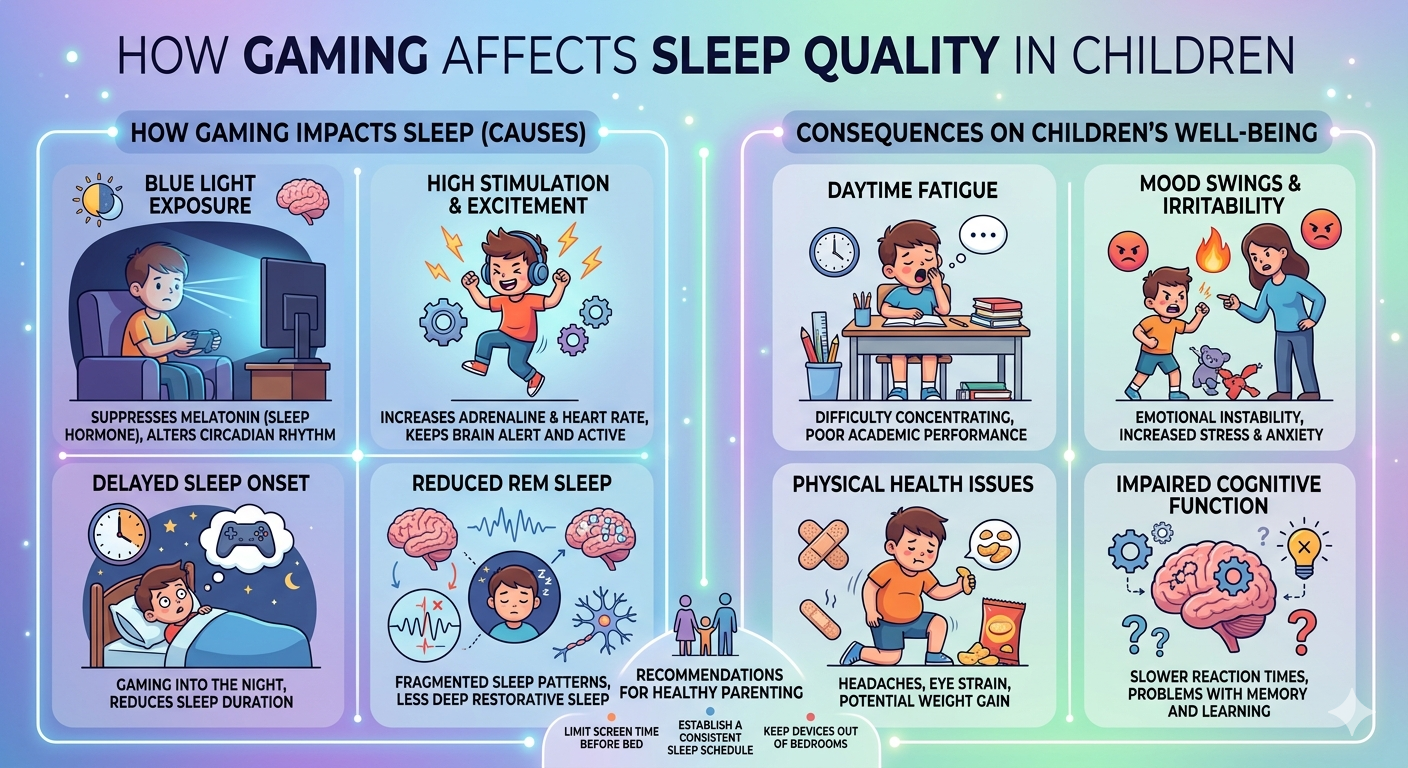
Gaming can affect sleep quality in children in several important ways. Screen exposure suppresses melatonin production, late-night gaming delays bedtime, emotional overstimulation keeps the brain alert, and online gaming creates ongoing social pressure that makes disconnecting difficult.
While gaming itself is not inherently harmful, excessive or poorly timed gaming can interfere with the deep, restorative sleep children need for healthy growth and emotional stability.
The solution is not fear or punishment, but balance, structure, and awareness. By setting healthy boundaries, encouraging calming bedtime routines, and teaching children about the importance of sleep, parents can help children enjoy gaming while still protecting their physical and mental well-being.
In the end, healthy sleep is one of the most important foundations for a child’s happiness, learning, and long-term development. Protecting it matters far more than finishing one more level before bed.