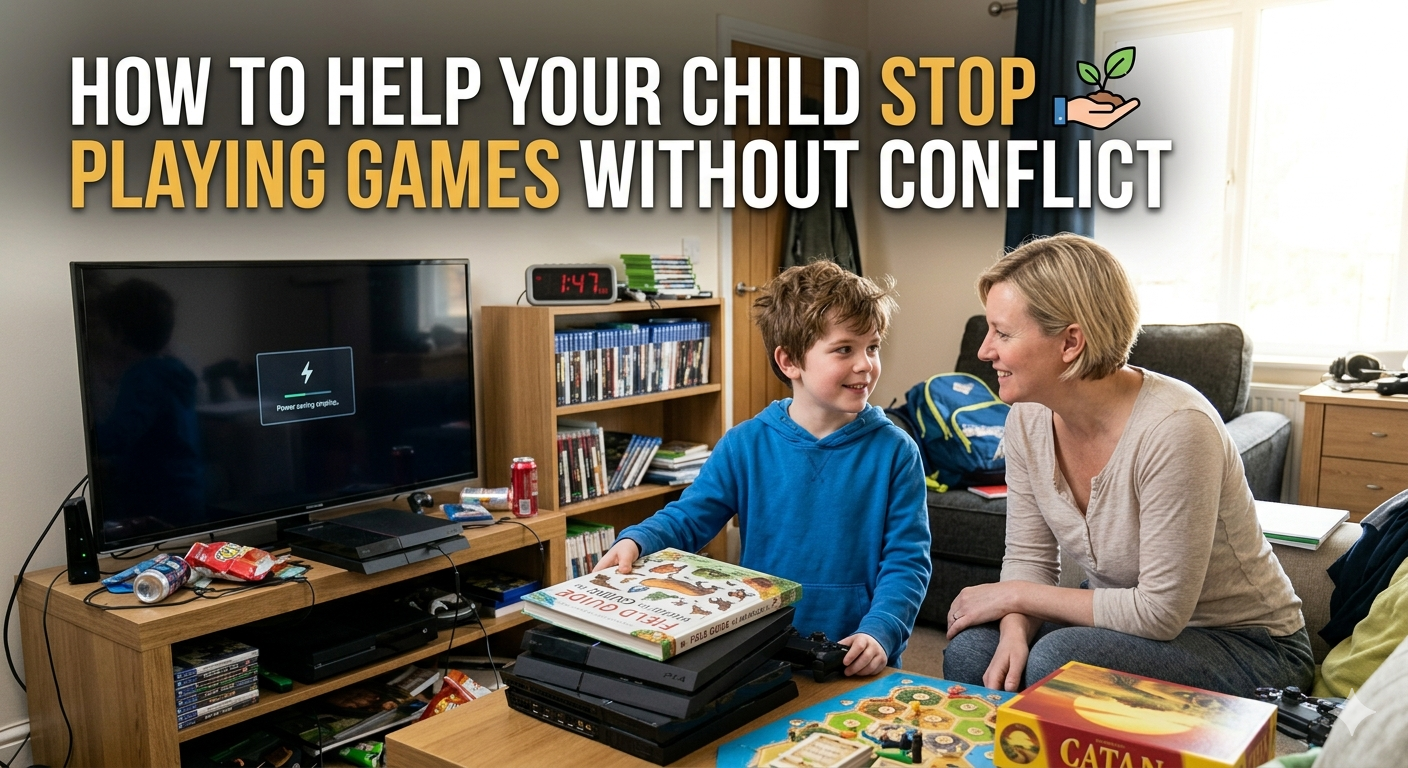
Practical strategies to reduce screen time without arguments, resistance, or emotional stress
Video games are one of the biggest sources of tension in modern parenting. Many parents feel trapped in a daily cycle of reminders, negotiations, shouting, and guilt. A child refuses to stop gaming. A parent becomes frustrated. The child gets angry or emotional. Everyone ends the day exhausted.
The problem usually is not gaming itself. The real issue is the conflict surrounding it.
Children play games because games are stimulating, rewarding, social, and predictable. Parents want balance, healthy habits, emotional development, and family connection. Both sides have understandable needs, yet the interaction often turns into a power struggle.
The good news is that reducing screen time does not require constant punishment, yelling, or dramatic restrictions. In fact, the more conflict involved, the harder it often becomes for children to cooperate.
What works better is a calm, structured, relationship-based approach that helps children transition away from games without feeling controlled or attacked.
This article explores practical strategies parents can use to reduce gaming time peacefully while protecting trust, emotional safety, and cooperation.
Understand Why Games Are So Hard to Leave
Many parents assume children resist because they are stubborn or disrespectful. But games are intentionally designed to hold attention.
Video games provide:
- Instant rewards
- Constant stimulation
- Clear goals
- Social interaction
- A sense of achievement
- Escape from stress or boredom
For children, especially younger ones, stopping a game can feel emotionally abrupt. Their brains are still developing self-control, planning, and emotional regulation.
This does not mean children should play endlessly. It simply means parents need to approach the situation with understanding instead of assuming defiance.
When parents shift from:
“Why are you being difficult?”
to:
“Why is this transition hard for my child?”
they often become calmer and more effective.
Stop Making Screen Time the Only Source of Joy
One of the biggest mistakes families make is removing games without improving the rest of the child’s daily experience.
If a child’s life feels filled with:
- homework,
- pressure,
- criticism,
- loneliness,
- boredom,
- or constant correction,
then gaming becomes the emotional highlight of the day.
When parents suddenly remove it, children naturally resist.
Reducing gaming works best when children also have:
- enjoyable family time,
- outdoor activities,
- hobbies,
- social opportunities,
- creative play,
- and emotional connection.
Children are more willing to leave games when real life feels rewarding too.
Ask yourself:
- Does my child have enough fun outside screens?
- Do we spend relaxed time together without lectures?
- Does my child feel connected to family members?
Sometimes the answer to excessive gaming is not stricter discipline. It is a richer offline life.
Avoid Sudden Shutdowns
Many conflicts happen because parents interrupt gaming abruptly.
Examples include:
- “Turn it off right now.”
- “That’s enough.”
- “I said stop immediately.”
Imagine being deeply focused on something you enjoy and having it removed without warning. Most adults would become irritated too.
Transitions are easier when children have time to prepare mentally.
Try using advance warnings:
- “You have 20 minutes left.”
- “Finish this round and then we’ll eat.”
- “In 10 minutes, screens are done.”
Younger children especially benefit from countdowns because they struggle with sudden shifts in attention.
Some parents find visual timers useful because they reduce arguments about fairness and timing.
The goal is to make stopping predictable instead of shocking.
Create Clear Routines Instead of Constant Negotiation
Children feel more secure when expectations are consistent.
If screen time rules change every day based on parental mood, children often keep negotiating because they hope the answer will change.
Instead of arguing daily, create a simple routine.
For example:
- Homework first
- Outdoor play or chores second
- Gaming after responsibilities
- Screens off at a fixed evening time
When expectations become routine, parents no longer need to “fight” for compliance every day.
The key is consistency, not harshness.
Children usually handle limits better when:
- rules are known ahead of time,
- consequences are predictable,
- and parents stay calm.
Stay Calm During Resistance
Many parents unintentionally escalate conflict by matching their child’s emotional intensity.
A child complains. The parent becomes louder. The child argues more. The parent threatens punishment. The situation spirals.
Children borrow emotional regulation from adults. If parents become emotionally reactive, children usually become more reactive too.
Calm does not mean permissive.
You can hold a boundary while staying emotionally steady.
For example:
“I know you want more time. It’s hard to stop. But gaming is finished for today.”
This approach communicates:
- empathy,
- confidence,
- and consistency.
Long explanations, lectures, and repeated arguments usually make transitions worse.
Short, calm statements are often more effective.
Validate Feelings Without Giving In
Parents sometimes fear that empathy weakens authority. In reality, empathy reduces defensiveness.
A child can feel understood without getting everything they want.
Examples:
- “I know you’re frustrated.”
- “You were really enjoying that.”
- “Stopping in the middle feels disappointing.”
Validation helps children calm down because they no longer feel emotionally dismissed.
But validation should not become negotiation.
Avoid:
“Okay fine, five more hours.”
Instead:
“I understand you’re upset, and it’s still time to stop.”
Children learn emotional resilience when adults acknowledge feelings while maintaining healthy limits.
Replace Punishment With Collaboration
Constant punishment often damages cooperation over time.
If every screen conflict leads to:
- yelling,
- shame,
- threats,
- or harsh consequences,
children may become secretive, resentful, or more emotionally attached to gaming.
A better long-term strategy is collaborative problem-solving.
Try asking:
- “What makes it hard to stop?”
- “What would help transitions go more smoothly?”
- “How can we make gaming balanced?”
Children are more cooperative when they feel involved instead of controlled.
You do not need to surrender authority. You simply include your child in the solution process.
Even younger children can contribute ideas when parents stay calm and respectful.
Watch for Emotional Dependence on Gaming
Sometimes excessive gaming is not just entertainment. It becomes emotional coping.
Children may use games to escape:
- anxiety,
- social struggles,
- academic pressure,
- loneliness,
- sadness,
- or low self-esteem.
If a child becomes extremely distressed whenever gaming stops, look beyond the behavior itself.
Ask:
- Is my child struggling emotionally?
- Are they overwhelmed at school?
- Do they lack confidence socially?
- Are they using games to avoid uncomfortable feelings?
In these cases, stricter rules alone rarely solve the issue.
Children may need:
- emotional support,
- stronger connection,
- better routines,
- therapy,
- or healthier coping strategies.
Understanding the emotional purpose behind gaming often changes the entire parenting approach.
Make Connection More Important Than Control
Children cooperate more with parents they feel connected to.
If most interactions revolve around correction and conflict, children may stop listening emotionally long before they stop listening behaviorally.
Try increasing positive interactions unrelated to screens:
- cooking together,
- walks,
- sports,
- board games,
- conversations,
- reading,
- shared hobbies.
Even 15 minutes of focused connection daily can improve cooperation dramatically.
Children are more likely to respect limits when they feel respected themselves.
Relationship safety matters.
Don’t Use Screens as the Main Reward or Threat
Many families accidentally increase the emotional power of gaming by making it the center of discipline.
Examples:
- “If you behave, you get games.”
- “If you misbehave, no games for a week.”
This can make gaming feel even more valuable and emotionally charged.
Instead, treat screens as one normal part of life, not the ultimate prize or punishment.
Healthy balance works better than emotional extremes.
When parents constantly weaponize screens, children often become more obsessed with them.
Help Children Learn Self-Regulation Gradually
Young children cannot instantly develop strong self-control. They need guidance and practice.
Instead of expecting perfect behavior immediately, focus on gradual improvement.
Celebrate small wins:
- stopping after reminders,
- handling disappointment calmly,
- following routines,
- transitioning without arguments.
You are teaching life skills, not simply enforcing obedience.
Over time, children internalize routines and emotional regulation when parents consistently model calm structure.
Be Careful With Comparisons and Shame
Statements like:
- “All you do is play games.”
- “You’re addicted.”
- “Other kids don’t behave like this.”
- “You’re lazy.”
can damage trust and self-esteem.
Children who feel shamed often become defensive rather than cooperative.
Focus on behavior instead of identity.
Instead of:
“You’re irresponsible.”
Try:
“We need a better balance between gaming and other responsibilities.”
Children respond better when they feel respected rather than criticized personally.
Model Healthy Screen Habits Yourself
Children notice adult behavior more than adult lectures.
If parents constantly scroll phones during meals, conversations, or family time, children may resist limits they see adults ignoring.
This does not mean parents must become perfect. It simply means modeling balance matters.
Try:
- screen-free meals,
- device-free conversations,
- shared offline activities,
- intentional breaks from technology.
Children learn digital habits partly by watching family culture.
Use Natural Consequences Instead of Emotional Reactions
Natural consequences teach responsibility more effectively than emotional punishments.
For example:
- If homework is unfinished, gaming happens later.
- If bedtime becomes too late, screen time is shorter the next day.
- If family responsibilities are ignored, free time decreases.
This feels more logical and less personal.
Avoid consequences driven by anger:
- “I’m taking everything away forever.”
- “You’ll never play again.”
Extreme punishments often create more resentment than learning.
Prepare for Pushback at First
Even healthy changes may initially cause frustration.
Children accustomed to unlimited or highly flexible gaming may protest new limits.
This does not mean the strategy is failing.
Consistency matters.
If parents repeatedly give in after emotional outbursts, children learn:
“Big reactions change the rules.”
Stay calm, empathetic, and consistent.
Most children adapt better than parents expect once routines stabilize.
Focus on the Long-Term Goal
The goal is not to raise a child who never plays games.
The goal is to raise a child who can:
- balance responsibilities,
- regulate emotions,
- transition between activities,
- maintain healthy habits,
- and enjoy technology responsibly.
This takes time.
Children develop these skills gradually through guidance, structure, and connection — not fear.
Reducing conflict today also protects the parent-child relationship for the future.
Practical Daily Strategies That Work
Here are simple habits many families find helpful:
1. Give transition warnings
Avoid abrupt endings.
2. Keep routines predictable
Consistency reduces negotiation.
3. Stay emotionally calm
Regulation is contagious.
4. Offer engaging offline alternatives
Children need enjoyable replacements.
5. Spend positive time together
Connection improves cooperation.
6. Avoid arguing during emotional moments
Discuss rules when everyone is calm.
7. Use empathy and firmness together
Understanding and boundaries can coexist.
8. Encourage balance, not perfection
Moderation is more sustainable than total restriction.
When Professional Help May Be Needed
Sometimes gaming behavior becomes severe enough to require outside support.
Consider professional guidance if your child:
- becomes extremely aggressive when screens are removed,
- stops participating in normal daily life,
- loses sleep regularly,
- withdraws socially,
- shows signs of anxiety or depression,
- or cannot function without gaming.
A mental health professional can help identify whether deeper emotional or developmental challenges are involved.
Seeking support is not failure. It is proactive parenting.
Final Thoughts
Helping a child stop playing games without conflict is less about control and more about leadership.
Children respond best when parents combine:
- calm boundaries,
- empathy,
- structure,
- consistency,
- and connection.
Arguments usually decrease when children know:
- what to expect,
- that their feelings are understood,
- and that limits will remain steady without anger or chaos.
Technology is part of modern life. The goal is not to eliminate it entirely, but to help children build a healthy relationship with it.
When parents focus on cooperation instead of power struggles, screen time becomes far less emotionally exhausting for everyone involved.