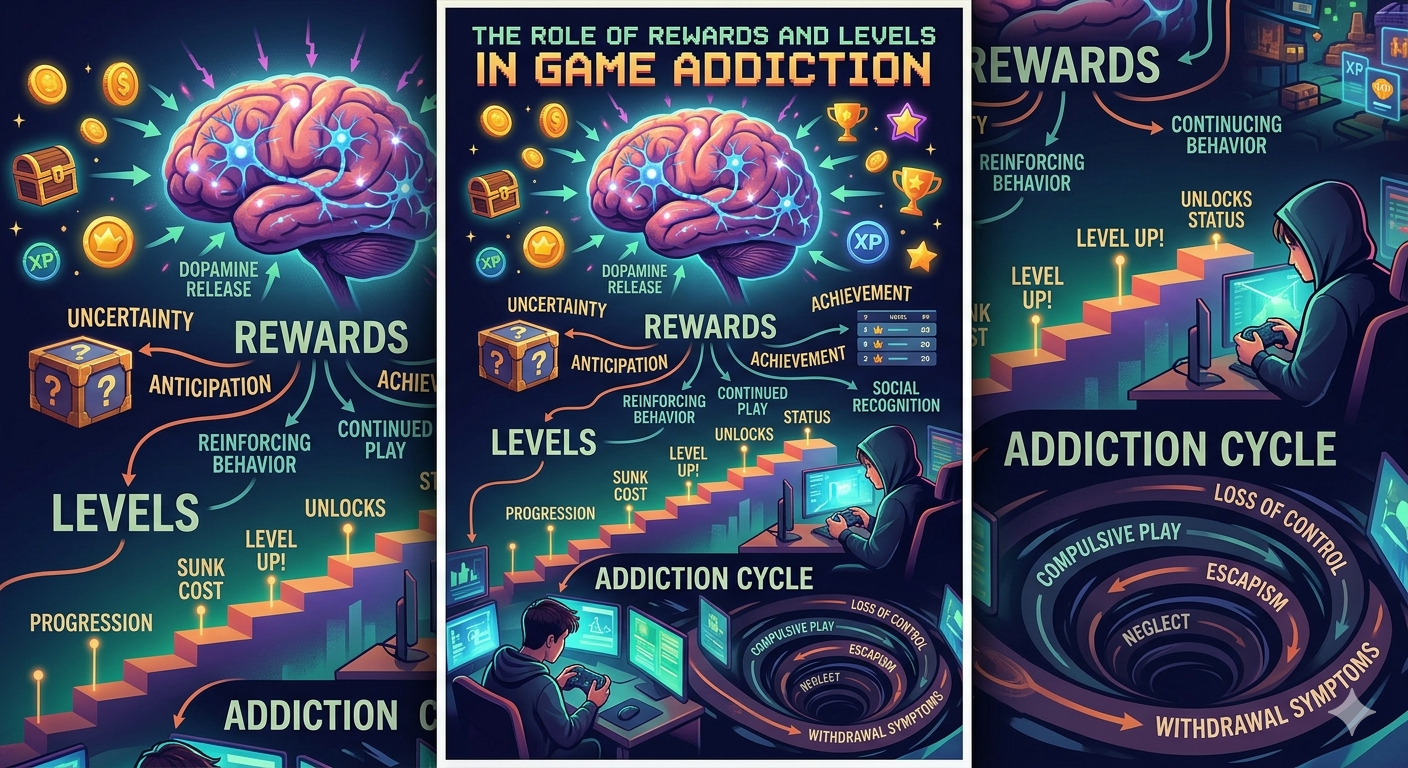
How Game Design Keeps Children Playing Longer Than They Intend
Video games are designed to be engaging. Bright visuals, exciting challenges, social interaction, and satisfying achievements make gaming enjoyable for millions of children around the world. For many families, gaming is a harmless source of entertainment and even a way to relax, socialize, or learn new skills.
However, modern games are no longer designed simply to entertain for short periods of time. Many are carefully built to maximize engagement, encourage repeated play, and keep users returning daily. Through reward systems, leveling mechanics, achievements, and psychological triggers, games can motivate children to continue playing far longer than they originally intended.
This does not mean all games are harmful or intentionally malicious. But understanding how game design influences behavior is important, especially for parents, educators, and anyone concerned about children’s mental and emotional well-being.
This article explores how rewards, levels, achievements, and behavioral design techniques contribute to excessive gaming, why children are especially vulnerable to these systems, and how families can encourage healthier gaming habits without eliminating fun entirely.
Why Games Feel So Rewarding
At the core of nearly every successful game is one simple principle: reward.
Games constantly provide players with:
- Points
- Coins
- Achievements
- Unlockable items
- Level progression
- Social recognition
- Visual rewards
- New abilities
- Competitive rankings
These rewards create feelings of accomplishment, excitement, and anticipation.
The brain naturally enjoys rewards because they activate the brain’s motivational and pleasure systems.
Dopamine is often misunderstood as a “pleasure chemical,” but it is more closely connected to motivation and reward-seeking behavior. Games are highly effective at triggering this system repeatedly.
Why Children Are More Vulnerable
Children and teenagers are especially sensitive to reward-based systems because their brains are still developing.
The parts of the brain responsible for:
- Impulse control
- Long-term planning
- Emotional regulation
- Delayed gratification
continue developing well into early adulthood.
At the same time, children are highly responsive to novelty, excitement, and immediate rewards.
This creates a situation where:
- Rewards feel extremely motivating
- Stopping becomes difficult
- Long-term consequences feel less important
Children may know they should stop playing, but emotionally struggle to disconnect from rewarding gameplay systems.
The Psychology Behind Game Rewards
Modern games often use psychological principles that strongly influence behavior.
Instant Gratification
Games provide immediate feedback:
- Win a match → receive points
- Complete a challenge → unlock rewards
- Defeat an enemy → gain experience
Real life often requires patience and delayed rewards. Games, in contrast, create rapid cycles of achievement that feel highly satisfying.
For children, this can make gaming more appealing than slower real-world activities like homework, reading, or chores.
Variable Rewards
One of the most powerful mechanisms in gaming is the use of unpredictable rewards.
Sometimes rewards arrive quickly. Other times they take longer.
This uncertainty keeps players engaged because they never know exactly when the next reward will appear.
This system is psychologically powerful because unpredictable rewards often create stronger behavioral attachment than predictable ones.
Examples include:
- Rare item drops
- Loot boxes
- Surprise rewards
- Randomized prizes
- Mystery upgrades
Children may continue playing “just a little longer” hoping the next reward is close.
The Power of Levels and Progression Systems
Level systems are among the most effective engagement tools in modern gaming.
Why Levels Feel So Satisfying
Leveling systems create:
- Clear goals
- Visible progress
- Structured achievement
- A sense of growth
Children enjoy seeing measurable improvement because it provides constant reassurance that effort is paying off.
Each level achieved creates:
- Excitement
- Validation
- Motivation to continue
The next level always feels close enough to pursue.
The “Almost There” Effect
Many games intentionally design progression systems to create the feeling that players are always close to another reward.
Examples include:
- Progress bars nearly full
- Experience points slowly increasing
- Daily missions almost completed
- Unlockables just within reach
This creates strong psychological pressure to continue.
A child may think:
“I’ll stop after the next level.”
But once the next level arrives, another target immediately appears.
This cycle can continue for hours.
Achievement Systems and Identity
Achievements and trophies have become major parts of gaming culture.
These systems reward players for:
- Completing challenges
- Spending time in-game
- Reaching milestones
- Exploring content
- Winning consistently
For children, achievements can become closely connected to identity and self-esteem.
They may begin to feel:
- Proud of rankings
- Emotionally attached to status
- Valued for gaming performance
- Socially respected through accomplishments
This emotional investment makes stepping away from games harder.
Social Rewards and Multiplayer Games
Modern gaming is not only about gameplay—it is also about social interaction.
Online games provide:
- Friend groups
- Team membership
- Social recognition
- Shared goals
- Competition
- Status within communities
These social rewards can become extremely powerful motivators.
Fear of Missing Out (FOMO)
Many games create urgency through:
- Limited-time events
- Seasonal rewards
- Daily login bonuses
- Exclusive items
Children may fear:
- Falling behind friends
- Missing rare rewards
- Losing social status
- Disappointing teammates
This fear of missing out encourages repeated and prolonged gaming sessions.
Daily Rewards and Habit Formation
Many games reward children simply for returning every day.
Examples include:
- Daily streak bonuses
- Login rewards
- Timed challenges
- Consecutive play incentives
These systems gradually transform gaming from occasional entertainment into habitual behavior.
Children may begin opening games automatically without consciously deciding to play.
The Role of Competition
Competitive games are particularly engaging because they combine rewards with emotional intensity.
Children often feel motivated by:
- Climbing rankings
- Defeating opponents
- Earning recognition
- Improving statistics
Competition activates emotional investment and encourages repeated practice.
However, it can also create:
- Frustration
- Anxiety
- Obsession with performance
- Difficulty stopping after losses
Some children continue playing repeatedly because they want to “end on a win” after losing.
How Games Blur the Sense of Time
Many children intend to play briefly but end up gaming for much longer.
Game design contributes to this in several ways.
Continuous Objectives
Games rarely provide natural stopping points.
Instead, they continuously offer:
- New quests
- New levels
- New rewards
- New challenges
- Notifications
- Timed events
The experience is designed to feel endless.
Immersion and Flow State
Games often create a psychological state called “flow,” where players become deeply focused and lose awareness of time.
During flow:
- Attention becomes highly concentrated
- External distractions fade
- Time feels distorted
Children in this state may genuinely not realize how long they have been playing.
Emotional Escape and Comfort
Games do not only provide rewards—they also provide emotional escape.
Children may turn to gaming to avoid:
- Stress
- Loneliness
- School pressure
- Social anxiety
- Family conflict
- Boredom
When games become a primary emotional coping tool, reward systems become even more powerful.
The child is no longer playing only for entertainment, but also for emotional relief.
Microtransactions and Monetized Rewards
Modern games increasingly include systems that encourage spending money.
These may include:
- Loot boxes
- Cosmetic items
- Battle passes
- Character upgrades
- Premium rewards
Some reward systems intentionally create frustration or slow progression to encourage purchases.
Children may feel pressured to spend money to:
- Keep up with peers
- Unlock rewards faster
- Improve status
- Avoid missing content
This raises concerns about manipulation, especially for younger audiences.
Are All Reward Systems Harmful?
Not necessarily.
Reward systems themselves are not inherently bad. In fact, rewards are part of how humans learn and stay motivated.
Games can provide:
- Goal-setting experiences
- Motivation
- Skill development
- Confidence
- Persistence
Problems usually arise when:
- Rewards become excessive
- Gaming replaces healthy activities
- Children lose control over playtime
- Emotional dependence develops
Balance is the key issue.
Signs That Reward Systems May Be Becoming Unhealthy
Parents should watch for signs such as:
- Difficulty stopping gaming
- Constant thinking about games
- Irritability when unable to play
- Neglecting responsibilities
- Loss of interest in other activities
- Sleep disruption
- Emotional dependence on rewards
Not every enthusiastic gamer is addicted, but persistent compulsive behavior deserves attention.
Why Children Struggle to Stop Playing
Adults sometimes assume children simply lack discipline. In reality, many games are intentionally engineered to maximize engagement using sophisticated psychological design.
Children struggle to stop because games combine:
- Reward anticipation
- Emotional stimulation
- Social pressure
- Endless progression
- Habit formation
- Competitive motivation
Their developing brains are particularly sensitive to these influences.
Understanding this helps parents respond with empathy rather than only punishment.
Helping Children Build Healthier Gaming Habits
The goal is not necessarily eliminating gaming entirely. Instead, families can help children develop balance and self-awareness.
1. Teach Children How Games Are Designed
Children benefit from understanding that games are intentionally built to encourage longer play.
Discuss:
- Reward systems
- Daily streaks
- Progression mechanics
- Psychological design
Awareness helps children recognize when games are influencing behavior.
2. Encourage Time Awareness
Children often lose track of time while gaming.
Helpful strategies include:
- Timers
- Scheduled breaks
- Visible clocks
- Pre-agreed stopping points
External structure helps children disconnect more easily.
3. Avoid Using Gaming as the Only Reward
If games become the primary source of pleasure or achievement, emotional dependence may increase.
Children also need:
- Outdoor play
- Creative hobbies
- Physical activity
- Face-to-face friendships
- Family interaction
A balanced life reduces overreliance on gaming rewards.
4. Create Clear Boundaries
Healthy limits may include:
- Screen-free bedtimes
- Homework before gaming
- Time limits
- Device-free meals
- Scheduled gaming periods
Consistency helps children develop healthier routines.
5. Focus on Emotional Needs
Sometimes excessive gaming reflects unmet emotional needs.
Children may be:
- Lonely
- Stressed
- Anxious
- Seeking accomplishment
- Looking for social belonging
Addressing underlying emotional struggles is often more effective than simply restricting games.
6. Model Healthy Technology Habits
Children observe adult behavior carefully.
If parents:
- Constantly check phones
- Struggle to disconnect from screens
- Use technology compulsively
children are more likely to imitate similar habits.
Healthy modeling matters.
The Responsibility of the Gaming Industry
As concerns about gaming addiction increase, many experts argue that game companies also hold responsibility.
Critics argue that some games intentionally exploit psychological vulnerabilities, especially in children, through:
- Addictive reward systems
- Aggressive monetization
- Endless progression loops
- Manipulative design patterns
Others argue that personal responsibility and parental involvement remain the primary solutions.
The debate continues, but awareness is growing about how strongly game design can influence behavior.
Building Digital Resilience
Children cannot avoid technology completely in the modern world. Instead, they need skills that help them interact with digital environments thoughtfully and responsibly.
Digital resilience includes:
- Self-control
- Critical thinking
- Time management
- Emotional awareness
- Healthy balance
These skills are increasingly important in a world designed to compete for attention constantly.
Final Thoughts
Rewards, levels, achievements, and progression systems are central to modern game design because they are highly effective at keeping players engaged. For children, whose brains are still developing impulse control and emotional regulation, these systems can become especially compelling.
Games use psychological principles such as variable rewards, social pressure, achievement systems, and endless progression to encourage continued play. While these features can make games exciting and motivating, they can also contribute to compulsive gaming habits and difficulty disconnecting.
The solution is not fear or complete restriction. Games can still offer creativity, enjoyment, friendship, and valuable learning experiences. The key is awareness, balance, and healthy boundaries.
When parents understand how game design works, they are better prepared to guide children toward healthier relationships with technology. And when children learn to recognize how rewards influence their behavior, they gain an important skill that extends far beyond gaming itself.
In today’s digital world, understanding how attention is shaped may be one of the most valuable forms of literacy children can develop.