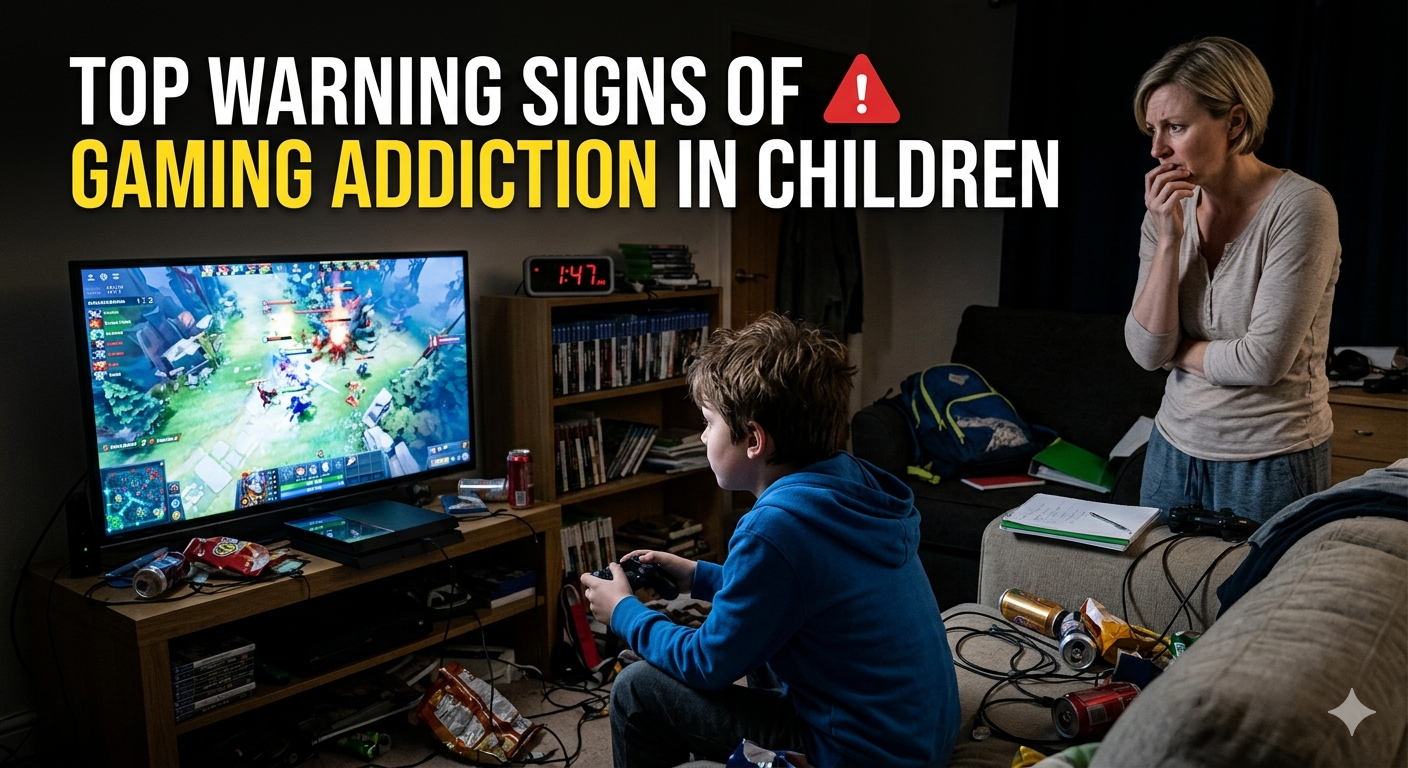
Video games are now a major part of modern childhood. Millions of children play games daily for entertainment, social interaction, creativity, and relaxation. In moderation, gaming is not automatically harmful. Some games can improve problem-solving, teamwork, strategic thinking, and even creativity.
However, there is growing concern among parents, teachers, psychologists, and pediatric experts about excessive gaming habits in children. What begins as harmless entertainment can sometimes develop into unhealthy dependency patterns that affect emotional wellbeing, school performance, behavior, sleep, and social development.
One of the biggest challenges for parents is knowing the difference between a child who simply enjoys gaming and a child who may be developing problematic gaming behavior.
Gaming addiction rarely appears overnight.
Instead, it usually develops gradually through behavioral, emotional, and cognitive changes that become more noticeable over time. Early recognition is important because intervention becomes much easier before patterns become deeply established.
This article explores the most common warning signs of gaming addiction in children, explains why these behaviors happen, and offers guidance for parents who want to create healthier digital habits before problems become severe.
Understanding Gaming Addiction in Children
Gaming addiction, sometimes referred to as problematic gaming behavior or gaming disorder, occurs when gaming begins interfering with important areas of a child’s life.
This may include:
- School performance
- Sleep
- Emotional health
- Family relationships
- Physical activity
- Social interaction
- Daily responsibilities
The issue is not simply about playing games frequently.
A child may spend several hours gaming without serious problems if they still maintain balance in other areas of life. The concern grows when gaming becomes emotionally controlling, compulsive, or disruptive.
Researchers studying problematic gaming often identify several core patterns:
- Loss of control over gaming
- Increasing priority given to gaming
- Emotional distress when unable to play
- Continuing excessive gaming despite negative consequences
Children are especially vulnerable because their brains are still developing, particularly in areas involving impulse control, emotional regulation, and decision-making.
Modern games are also highly stimulating. Many are intentionally designed around reward systems, achievements, social pressure, rankings, and continuous progression systems that encourage long play sessions.
For some children, this creates an unhealthy cycle of emotional dependence.
Why Children Become Vulnerable to Gaming Addiction
Not every child who enjoys gaming becomes addicted. Certain factors increase risk.
These include:
- Social isolation
- Anxiety or depression
- Low self-esteem
- Attention difficulties
- Stress
- Lack of structure at home
- Limited offline hobbies
- Poor emotional coping skills
Games often provide children with:
- Instant rewards
- A sense of achievement
- Social acceptance
- Escape from stress
- Predictable goals
- Control and mastery
For children struggling emotionally or socially, gaming can become more than entertainment — it becomes a coping mechanism.
That is why parents should look beyond screen time alone and focus on the emotional relationship the child has with gaming.
Behavioral Warning Signs of Gaming Addiction
1. Loss of Interest in Other Activities
One of the earliest warning signs is when gaming begins replacing activities the child previously enjoyed.
A child who once enjoyed:
- Outdoor play
- Sports
- Reading
- Art
- Family activities
- Hanging out with friends
may gradually lose interest in them.
Instead, gaming becomes the primary source of enjoyment and stimulation.
This shift matters because healthy childhood development depends on diverse experiences, not a single dominant activity.
Children need:
- Physical movement
- Face-to-face interaction
- Creative exploration
- Real-world learning experiences
When gaming dominates daily life, those experiences often decrease.
2. Constant Preoccupation With Gaming
Another major warning sign is obsessive thinking about games even when not actively playing.
The child may:
- Talk about games constantly
- Watch gaming videos all day
- Think about gaming during school
- Rush through responsibilities to return to gaming
- Become mentally distracted during conversations
Gaming begins occupying most of their mental attention.
Parents sometimes notice that their child seems emotionally absent unless the topic involves games.
This kind of mental fixation can interfere with concentration, academic performance, and emotional presence in daily life.
3. Difficulty Stopping Play
Most children dislike ending enjoyable activities, but addicted gaming behavior often creates extreme difficulty stopping.
Warning signs include:
- Arguing every time gaming ends
- Ignoring time limits
- Sneaking extra gaming time
- Saying “just one more game” repeatedly
- Becoming angry or emotionally explosive when interrupted
Children struggling with compulsive gaming often lose track of time entirely because games are designed to keep players continuously engaged.
Many multiplayer games also discourage stopping by using:
- Continuous matches
- Social pressure from teammates
- Daily rewards
- Ranking systems
- Fear of missing out
4. Lying About Gaming Time
Dishonesty around gaming is a serious red flag.
Children may:
- Hide devices
- Secretly play late at night
- Delete screen-time records
- Lie about how long they played
- Pretend to do homework while gaming
When children begin concealing gaming behavior, it often indicates they already recognize the behavior is becoming problematic.
Secrecy usually increases as dependency grows.
5. Declining School Performance
Academic decline is one of the clearest indicators that gaming is interfering with healthy functioning.
Parents may notice:
- Falling grades
- Incomplete homework
- Reduced concentration
- Lack of motivation
- Poor memory retention
- Sleepiness during school
Excessive gaming can reduce time available for:
- Studying
- Reading
- Sleep
- Mental recovery
Children who stay mentally overstimulated for long periods may also struggle maintaining attention during slower-paced learning environments.
Emotional Warning Signs of Gaming Addiction
6. Irritability and Mood Swings
Gaming addiction often affects emotional regulation.
Children may become:
- Easily frustrated
- Angry when interrupted
- Irritable when unable to play
- Emotionally reactive after losing games
Some children experience mood changes similar to withdrawal when gaming access is restricted.
This happens because highly stimulating games activate reward pathways in the brain. When the stimulation suddenly stops, emotional discomfort may temporarily increase.
Parents sometimes describe their child as seeming “like a different person” after excessive gaming sessions.
7. Emotional Dependence on Gaming
Gaming becomes especially concerning when children rely on it as their primary emotional escape.
The child may use gaming to avoid:
- Loneliness
- Anxiety
- Sadness
- Stress
- Family conflict
- Academic pressure
Rather than developing healthy coping strategies, the child retreats into virtual environments whenever difficult emotions appear.
Over time, this can weaken emotional resilience and problem-solving abilities in real life.
8. Increased Aggression or Hostility
Not every gamer becomes aggressive, but excessive gaming can contribute to emotional dysregulation in some children.
Warning signs include:
- Frequent yelling
- Hostile reactions
- Breaking objects after losing
- Verbal aggression
- Intense emotional overreactions
Competitive online games often create highly emotional environments filled with stress, pressure, and frustration.
Children with poor emotional regulation may struggle separating game-related emotions from real-world behavior.
9. Social Withdrawal
Gaming addiction may gradually reduce real-world social interaction.
The child may:
- Spend less time with family
- Avoid outdoor activities
- Withdraw from friendships
- Prefer online interactions only
- Isolate themselves in their room
While online gaming can include social interaction, it does not fully replace in-person communication skills, emotional connection, or healthy social development.
Children still need face-to-face relationships to develop empathy, communication skills, and emotional intelligence.
Cognitive Warning Signs of Gaming Addiction
10. Reduced Attention Span
Fast-paced games constantly stimulate the brain with:
- Rapid rewards
- Instant feedback
- Quick decisions
- Bright visuals
- High emotional intensity
After prolonged exposure, some children struggle adapting to slower-paced tasks like:
- Reading
- Homework
- Classroom learning
- Long conversations
Parents may notice:
- Constant boredom
- Difficulty focusing
- Impatience
- Mental restlessness
The child begins craving constant stimulation.
11. Obsessive Thinking Patterns
Gaming addiction may create repetitive thought loops centered around:
- Strategies
- Rankings
- Rewards
- Achievements
- Future gaming sessions
The child may seem mentally consumed by gaming goals even during meals, schoolwork, or family time.
This obsessive mental focus can interfere with healthy cognitive balance.
12. Poor Decision-Making and Impulse Control
Excessive gaming may weaken self-control in vulnerable children.
Warning signs include:
- Inability to follow limits
- Impulsive emotional reactions
- Ignoring consequences
- Prioritizing gaming over responsibilities
Children already struggle with impulse control due to normal brain development. Highly stimulating reward systems can make self-regulation even more difficult.
Physical Signs Parents Should Not Ignore
Gaming addiction often creates physical symptoms too.
These may include:
- Sleep deprivation
- Headaches
- Eye strain
- Poor posture
- Fatigue
- Reduced physical activity
- Weight gain or unhealthy eating habits
Children deeply immersed in gaming may skip meals, avoid exercise, or neglect basic self-care routines.
Sleep disruption is particularly important because poor sleep affects:
- Mood
- Memory
- Emotional control
- Learning
- Physical health
Late-night gaming is one of the strongest warning signs of unhealthy gaming patterns.
When Gaming Becomes the Child’s Entire Identity
One overlooked warning sign is when gaming becomes the child’s primary identity source.
The child may:
- Only feel successful in games
- Define themselves through rankings or achievements
- Lose confidence outside gaming
- Avoid real-world challenges
This becomes dangerous because real life naturally contains frustration, uncertainty, and slower rewards.
Children need confidence built through multiple areas of life:
- Learning
- Creativity
- Relationships
- Sports
- Personal growth
- Problem-solving
Balanced identity development protects emotional wellbeing.
Why Early Intervention Matters
Gaming addiction becomes harder to address once patterns become deeply ingrained.
Early intervention helps because:
- Habits are easier to change
- Emotional dependency is less severe
- Family routines are easier to restore
- Academic damage may still be reversible
Parents should avoid waiting until problems become extreme.
Small warning signs often appear months or years before serious consequences emerge.
What Parents Should Do If They Notice These Warning Signs
1. Stay Calm and Avoid Panic
Many parents react with:
- Anger
- Harsh punishments
- Device confiscation
- Constant criticism
While understandable, extreme reactions often increase conflict rather than solving the problem.
Children may become more secretive or emotionally defensive.
2. Focus on Understanding the Underlying Cause
Ask:
- Is my child stressed?
- Lonely?
- Struggling socially?
- Using gaming to escape emotions?
- Lacking confidence offline?
Gaming addiction is often connected to deeper emotional needs.
Understanding those needs is essential.
3. Create Structured Limits
Healthy boundaries may include:
- Screen-free bedrooms
- No gaming before homework
- Time limits
- Device-free family meals
- Mandatory physical activity
- Technology-free bedtime routines
Consistency matters more than strictness.
4. Encourage Alternative Sources of Reward
Children need enjoyable offline experiences too.
Encourage:
- Sports
- Creative hobbies
- Outdoor activities
- Music
- Art
- Family interaction
- Reading
- Social activities
The goal is not removing all gaming, but restoring balance.
5. Model Healthy Digital Behavior
Parents who constantly use phones or screens may unintentionally normalize excessive digital habits.
Children learn from observation.
Healthy family technology habits should apply to everyone.
6. Seek Professional Support if Necessary
If gaming causes:
- Severe emotional distress
- Major academic decline
- Social isolation
- Aggression
- Sleep disruption
- Family conflict
professional guidance may help.
Child psychologists and behavioral specialists can assist families in rebuilding healthy routines and emotional coping skills.
Gaming Is Not the Enemy — Imbalance Is
It is important to avoid extreme thinking.
Not all gaming is harmful.
Many children enjoy games responsibly while still:
- Performing well in school
- Maintaining friendships
- Staying physically active
- Managing emotions effectively
Gaming only becomes dangerous when balance disappears.
Healthy digital habits involve:
- Moderation
- Structure
- Emotional awareness
- Open communication
- Strong offline experiences
The goal is not fear-based parenting.
The goal is helping children build a healthy relationship with technology before harmful patterns take control.
Final Thoughts
Gaming addiction in children rarely begins with dramatic warning signs. It usually develops slowly through emotional dependence, behavioral changes, declining balance, and loss of control.
Parents should pay attention to:
- Mood changes
- Sleep disruption
- Academic decline
- Social withdrawal
- Emotional dependence on gaming
- Loss of interest in real-world activities
The earlier these patterns are recognized, the easier they are to address.
Healthy gaming is possible when children maintain balance across all areas of life:
- School
- Sleep
- Family
- Physical activity
- Emotional wellbeing
- Real-world relationships
Technology is now a permanent part of childhood. The challenge is not eliminating games entirely, but teaching children how to engage with them in healthy, controlled, and emotionally balanced ways before excessive gaming becomes a serious problem.